
Knowledge
How to Choose a Commercial Upright Glass Door Display Chiller
A practical guide to selecting the right temperature range, cabinet type, door quantity, capacity, glass configuration, shelf layout and electrical specification for beverage, chilled food and frozen product display.
Start with the Product Temperature and Display Purpose
An upright glass door cabinet may look similar from the outside, but a beverage chiller, stainless steel kitchen display chiller and frozen food display freezer serve different temperature and merchandising requirements. The first decision should therefore be what products will be stored and the temperature they require.
After confirming the product category, buyers can compare door quantity, usable capacity, cabinet dimensions, shelf layout, cooling method, glass-door performance, voltage and installation conditions.
Product → Temperature → Capacity → Installation
This sequence prevents a common purchasing mistake: selecting a cabinet by appearance or door quantity before confirming the actual cooling and display requirement.
Choose a Chiller or a Freezer First
The required temperature determines the refrigeration system, insulation, door design and suitable products. A display chiller should not be selected for frozen storage simply because the cabinet dimensions are suitable.
Suitable for beverages, dairy products, prepared food, sauces, ingredients and packaged chilled products.
Suitable for frozen meat, seafood, ice cream, dumplings, hot pot ingredients and packaged frozen food.
Compare the Main Cabinet Types
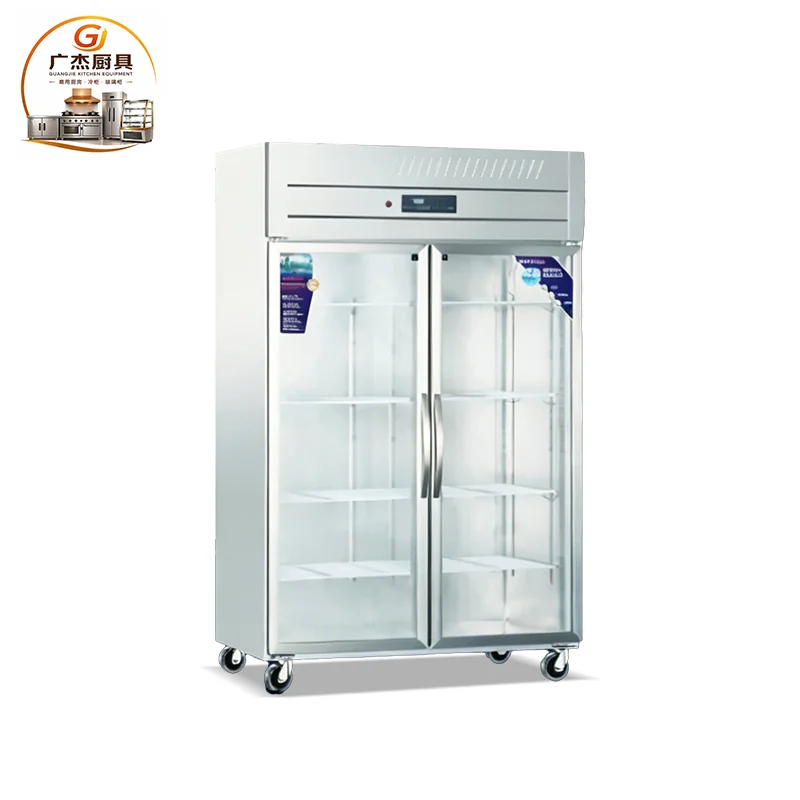
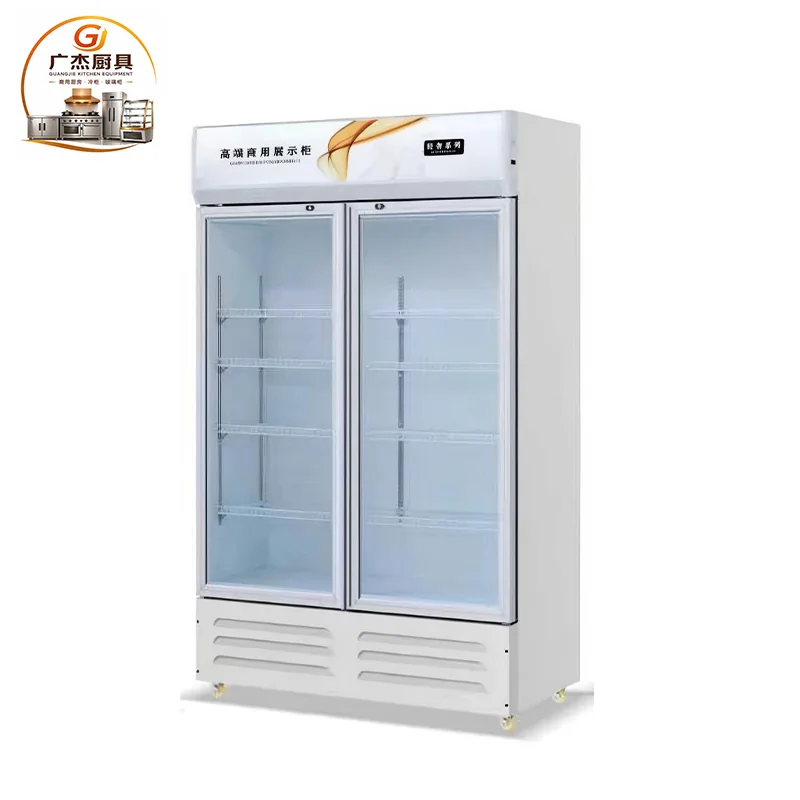
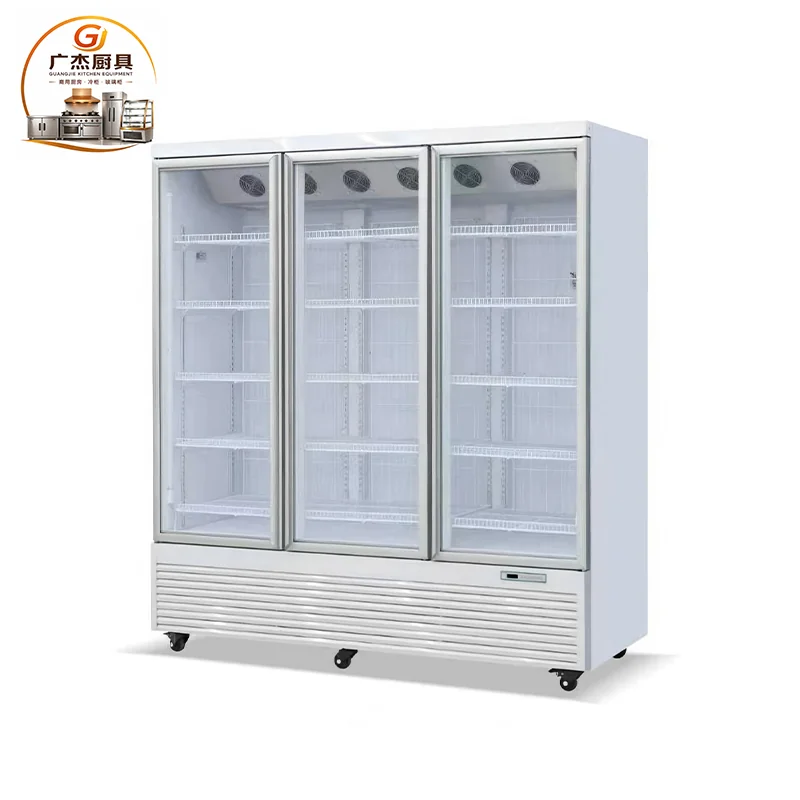
Match Door Quantity to Real Display Volume
Door quantity affects cabinet width, shelf area, product visibility, loading convenience and floor-space use. Select by daily product volume and available installation width rather than choosing the largest cabinet automatically.
Also consider how often each door will be opened. A wider cabinet with clearly separated product categories may support better inventory control in high-traffic retail areas.
Compare Representative Guangjie Configurations
The figures below are current model references. Final dimensions, temperature, voltage, shelf layout and packing requirements should be confirmed for each order.
Check Cooling Performance Under Real Operating Conditions
Cabinet performance is affected by ambient temperature, ventilation, product loading, door-opening frequency and the temperature of products placed inside. Provide the supplier with realistic operating conditions instead of evaluating only the nominal temperature range.
Inspect the Glass Doors, Lighting and Shelves
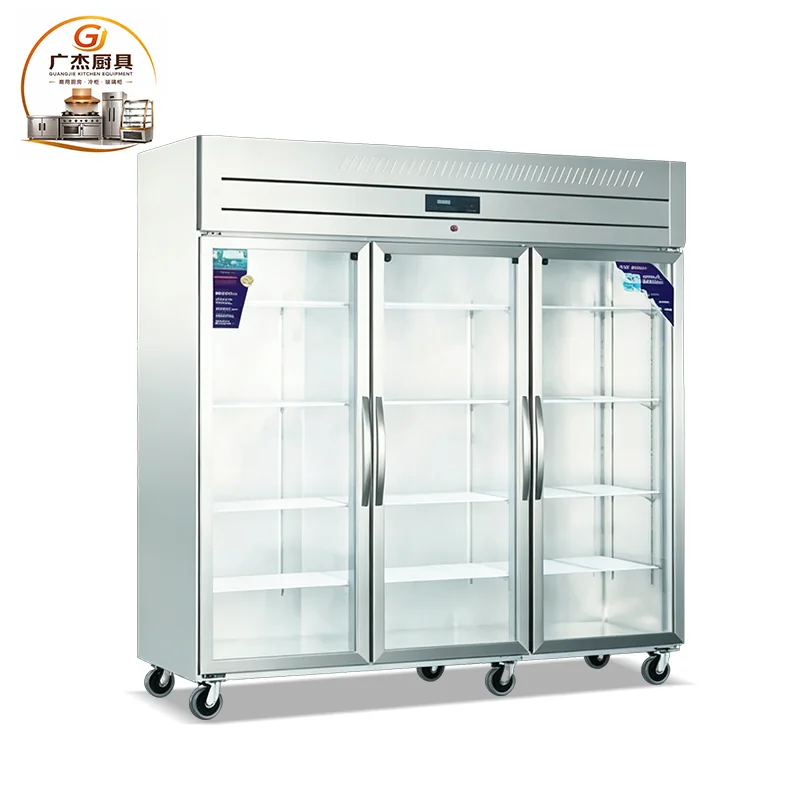
Glass doors improve product visibility, but buyers should also check the door seal, closing action, frame construction and condensation-control configuration. These details affect daily presentation and energy use.
Confirm Installation and Electrical Conditions
Cabinet Dimensions
Measure width, depth and height together with access doors, elevators, corridors and the final installation position.
Ventilation Clearance
Leave suitable clearance around the condenser and air outlets according to the selected refrigeration configuration.
Voltage and Frequency
Confirm local voltage, frequency, plug type and electrical connection before production and shipment.
Mobility and Floor
Check caster or adjustable-foot requirements, floor level and whether the cabinet must be moved for cleaning.
Information to Send Before Requesting a Quote
Continue Comparing Commercial Refrigeration Options
Frequently Asked Questions
What is the difference between a glass door chiller and a glass door freezer?
A chiller is designed for refrigerated beverages and chilled food, while a freezer operates at lower temperatures for frozen products. Confirm the required holding temperature before selecting the cabinet.
How many doors should I choose?
Choose according to available width, product quantity, shelf area and expected customer or staff access. Single-door models save space, while three-door models support larger display volumes.
Can shelf spacing be customized?
Shelf quantity and spacing can be discussed according to bottle height, package dimensions, product category and required loading arrangement.
What electrical information is required for quotation?
Provide the destination voltage, frequency and plug type. This information should be confirmed before production to match the local electrical standard.
Why does ambient temperature matter?
High room temperature, poor ventilation, direct sunlight and frequent door opening increase the refrigeration load. The supplier should know the expected operating environment.
What information helps confirm the final cabinet size?
Send the installation width, depth limit, height limit, access route, required capacity and product package dimensions. A store or kitchen layout is also useful.
Send Your Product Type, Temperature and Required Capacity
Guangjie Kitchen can help compare upright glass door chillers and freezers according to product category, door quantity, dimensions, shelf arrangement, voltage, packing and destination requirements.