
Commercial kitchen buying guide / 03
How to Choose a Commercial Kitchen Exhaust Hood for Your Cooking Line
Select a commercial kitchen exhaust hood by the cooking appliances, wall or island position, hood construction, grease-filter access and a clearly agreed supply scope.
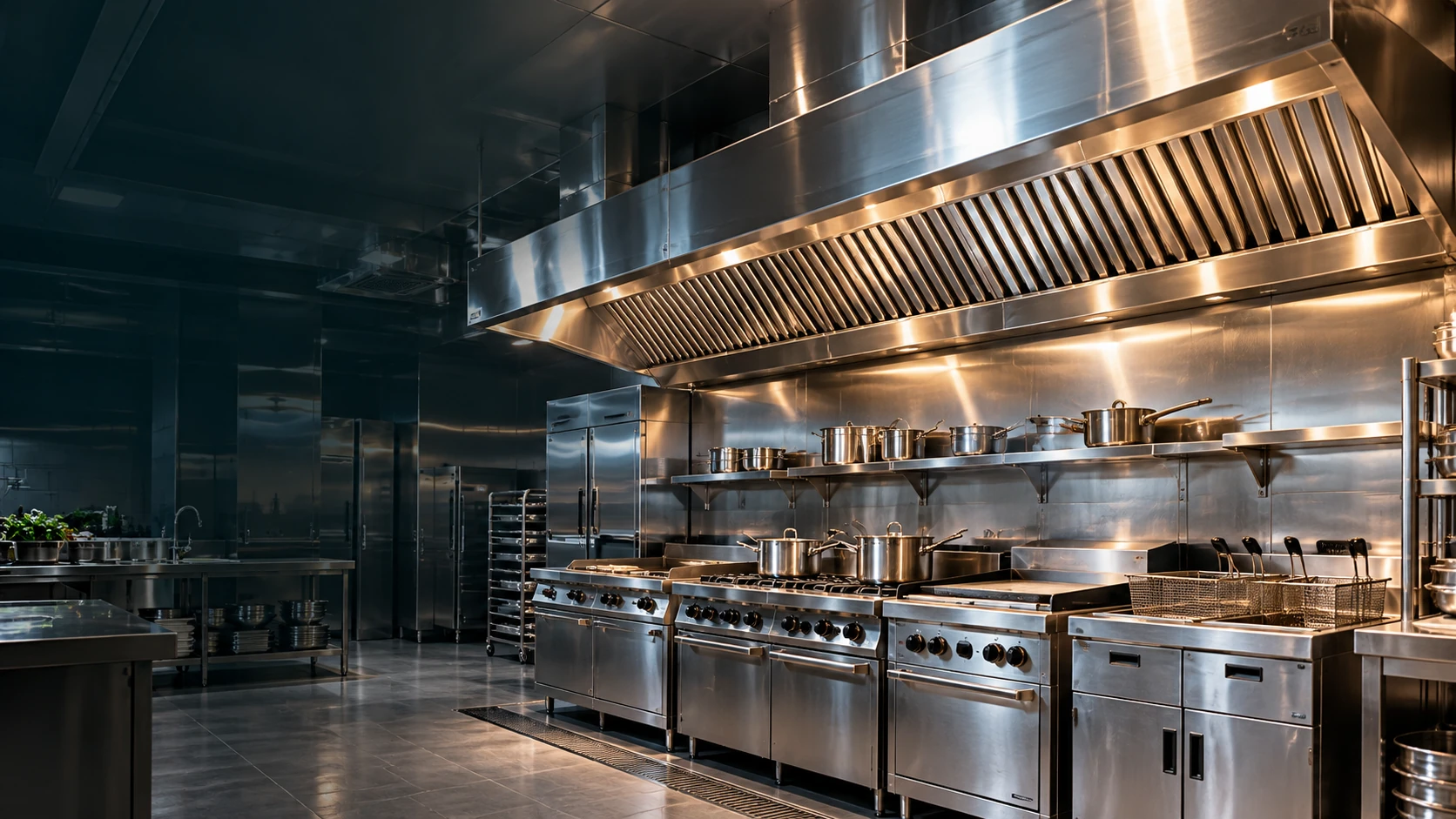
Start with the appliances beneath the hood
An exhaust hood should be specified from the cooking line and the building services, not only from an attractive catalog image. The cooker arrangement, expected cooking duty, canopy position and access for grease collection determine what the hood needs to do.
Important distinction: a stainless steel canopy is only part of a kitchen ventilation system. A fan, ductwork, make-up air system, controls, fire-protection measures and installation may require separate design and purchase.
Cooking duty
List fryers, woks, griddles or other appliances and the intended cooking processes for review by the project ventilation designer.
Position
Record wall-mounted or free-standing island equipment, ceiling height and possible duct connection locations.
Cleaning access
Ask about grease filters, collecting surfaces, removable components and how the hood will be cleaned.
Responsibility split
Confirm who designs and supplies the canopy, ducts, fan, support, electrical equipment, safety systems and commissioning.
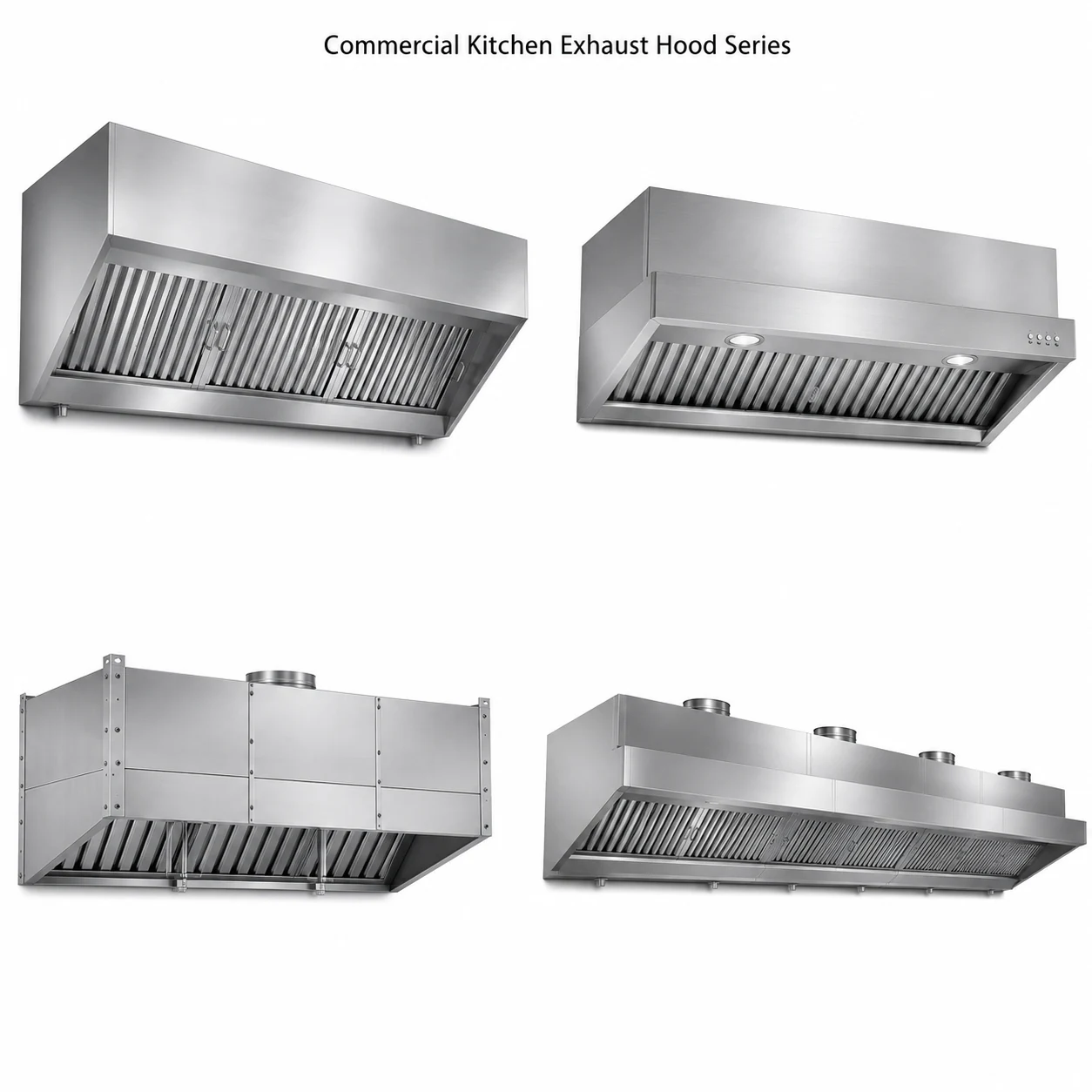
Compare commercial hood formats
Swipe sideways to view the complete comparison table →
| Hood option | Selection context | Request confirmation of |
|---|---|---|
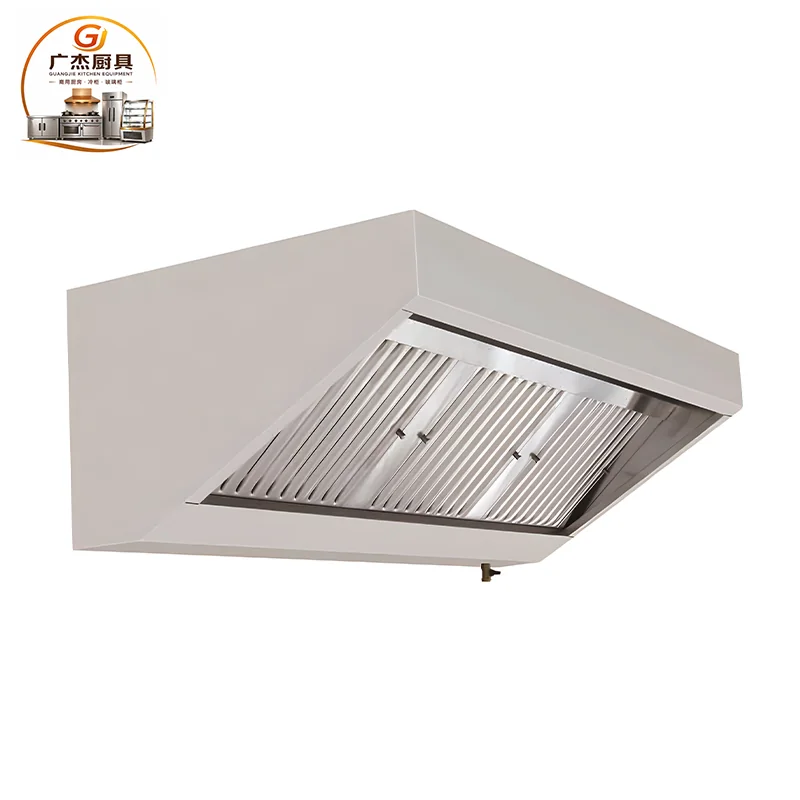
| Wall-mounted canopy | Cooking line placed along a wall | Canopy size, wall or ceiling support, connection position and filter access |
| Island or large project canopy | Cooking stations away from adjacent walls | Appliance coverage, structure, space and project-designed ventilation arrangement |
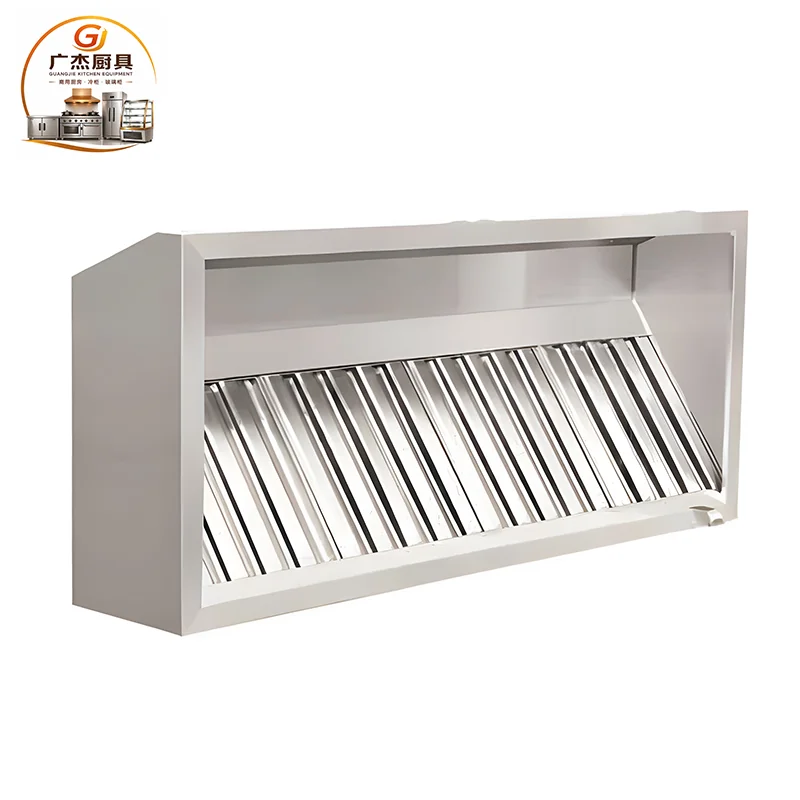
| Grease-filter canopy | Cooking processes where specified grease management is required | Filter type, drain/collection details, removal and cleaning procedure |
| Flat-packed canopy | Shipping or building access requires a sectional delivery format | Actual knock-down availability, assembly method, structural joints and site installation scope |
Guangjie lists commercial exhaust hood formats, wall-mounted exhaust hoods and ventilation accessories. Confirm the available model, material and options for your project individually.
Cooking line / illustrative context
See how the canopy relates to the cooking equipment
A hood is purchased for an identified cooking line. The scene below illustrates the relationship between the canopy, cooking appliances and access for cleaning. It is not documentation of a Guangjie installation or a compliant engineered system.
Canopy dimensions alone do not determine extraction airflow
Exhaust performance depends on the cooking equipment, thermal and contaminant loads, hood geometry, air distribution, duct pressure losses and relevant local requirements. A hood supplier’s dimensional drawing should not be mistaken for an approved HVAC design.
- Provide a cooking equipment schedule: make, type, approximate footprint and position of appliances to be installed.
- Review the canopy location: confirm width, depth, mounting height, walls or structural support and cleaning access.
- Specify construction: stainless steel grade, metal thickness, finish, grease filtering and collection arrangement where needed.
- Coordinate services: agree duct connection, fan specification, make-up air, electrics and who designs these systems.
- Check regulations: confirm project-specific fire safety, hygiene, approvals or certification with the qualified local parties. Do not assume a general-purpose hood has every required approval.
Ask a qualified designer to verify airflow and code requirements for the actual installation; avoid choosing an exhaust fan solely from the canopy size.
A quotation-ready exhaust hood checklist
- Cooking line drawing and appliance list
- Number of canopies and mounting position
- Desired length, width and canopy height
- Steel grade, finish and thickness
- Filter type and cleaning access
- Ventilation calculations and defined scope
- Applicable destination codes / approvals
- Packing restrictions and delivery destination
When available, attach the project’s duct route or kitchen plan and clearly indicate whether you require a hood only or have separate mechanical design and supply obligations.
Common commercial exhaust hood questions
Are fans and ducts included with the stainless steel hood?
Not necessarily. Treat them as separate scope items unless expressly included in the supplier’s technical quotation.
Can I order an exhaust hood from its dimensions alone?
Dimensions are useful, but the cooking appliances, grease treatment, mounting, ventilation design and applicable rules also require confirmation.
Is a flat-packed hood an option?
Guangjie’s range references such formats. Request confirmation of the exact model, joining details, installation obligations and packed measurements.
Related Guangjie products and applications
Commercial Kitchen Exhaust Hood RangeView details →Wall-Mounted Exhaust HoodsView details →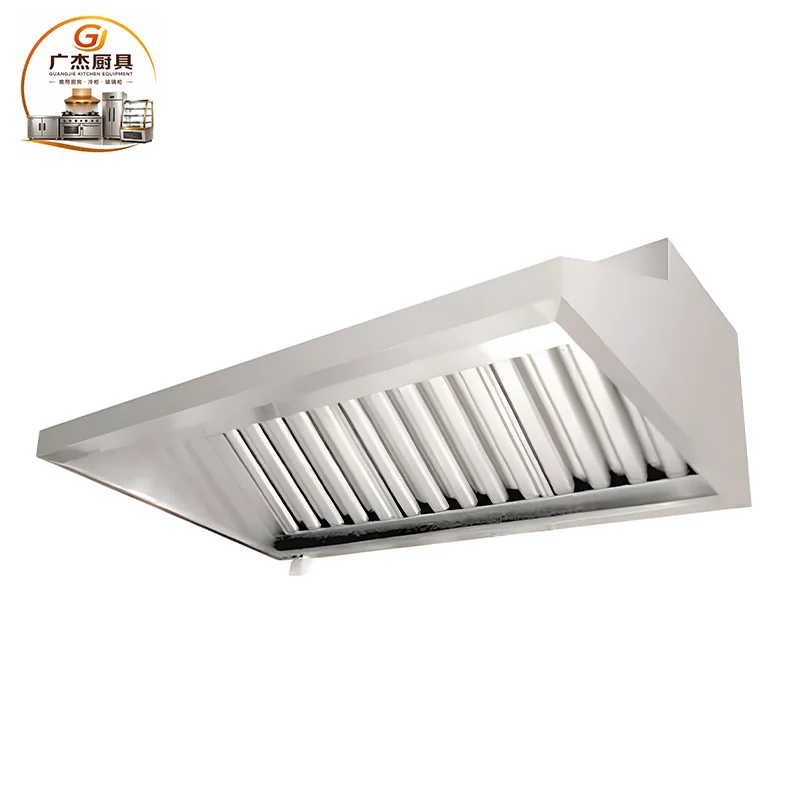 Restaurant Kitchen ApplicationsView details →
Request a model-specific quotation
Send your cooking-line plan, hood dimensions, construction requirements and the scope required in your quotation.