
How to Choose Stainless Steel Kitchen Trolleys and Bakery Tray Racks
Choose by the job, the tray, the load and the route—not by a trolley photo alone. Compare multi-level utility carts, flat platforms and bakery rack trolleys with a practical purchase checklist.
Explore trolley formats ↓ Illustrative workshop context, not a documented Guangjie site installation.
Begin with the task: what exactly is moving?
Kitchen trolleys support different steps: carrying tableware, transferring cartons, returning dishes, collecting waste or transporting bakery trays. Picking the wrong format can waste working space even when the overall trolley dimensions appear correct.
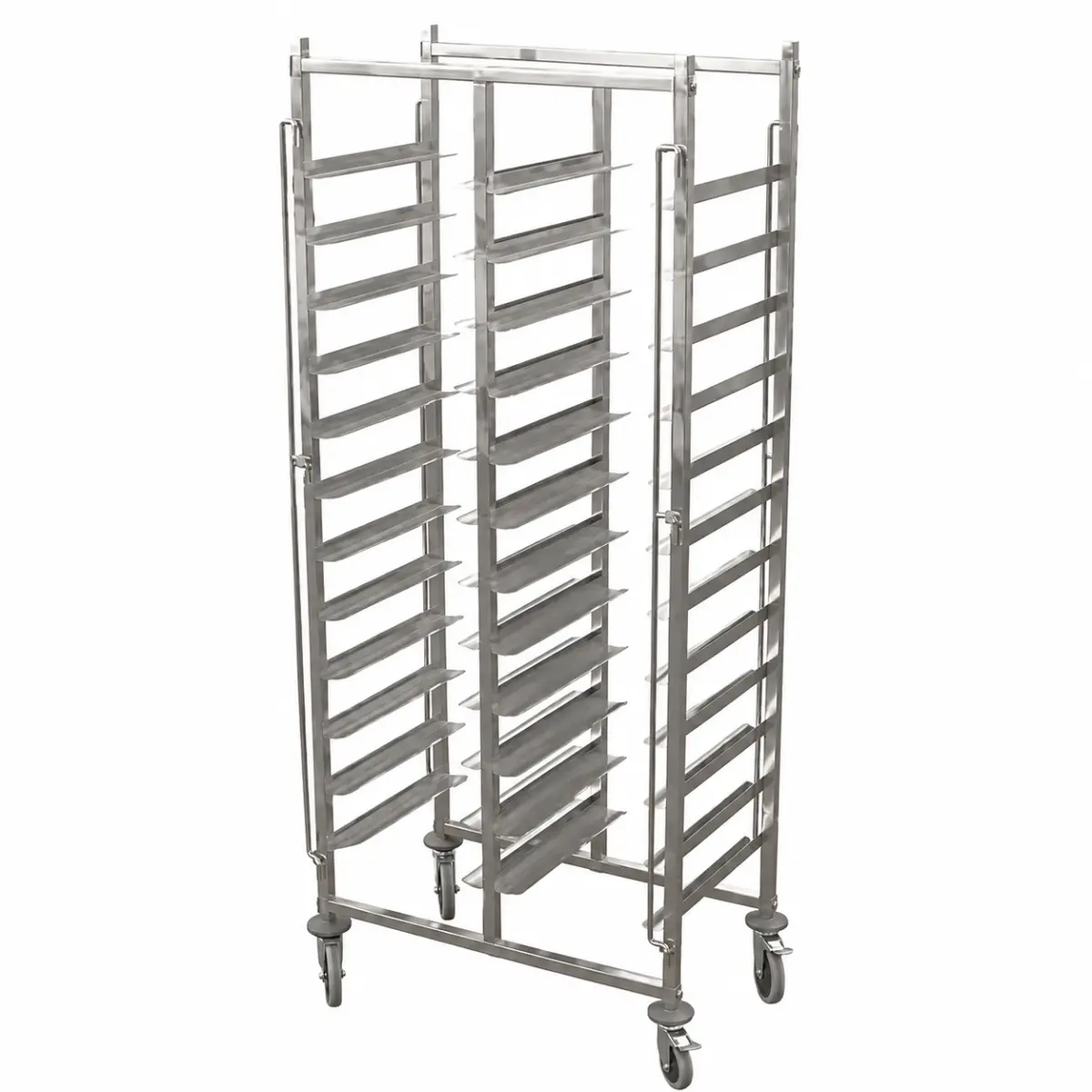
Tray-specific support
Choose by the tray width, depth, rim profile and how trays will be inserted and withdrawn. Rack layer count matters only when the actual trays fit and safe operating loads are confirmed.
View bakery rack trolley models →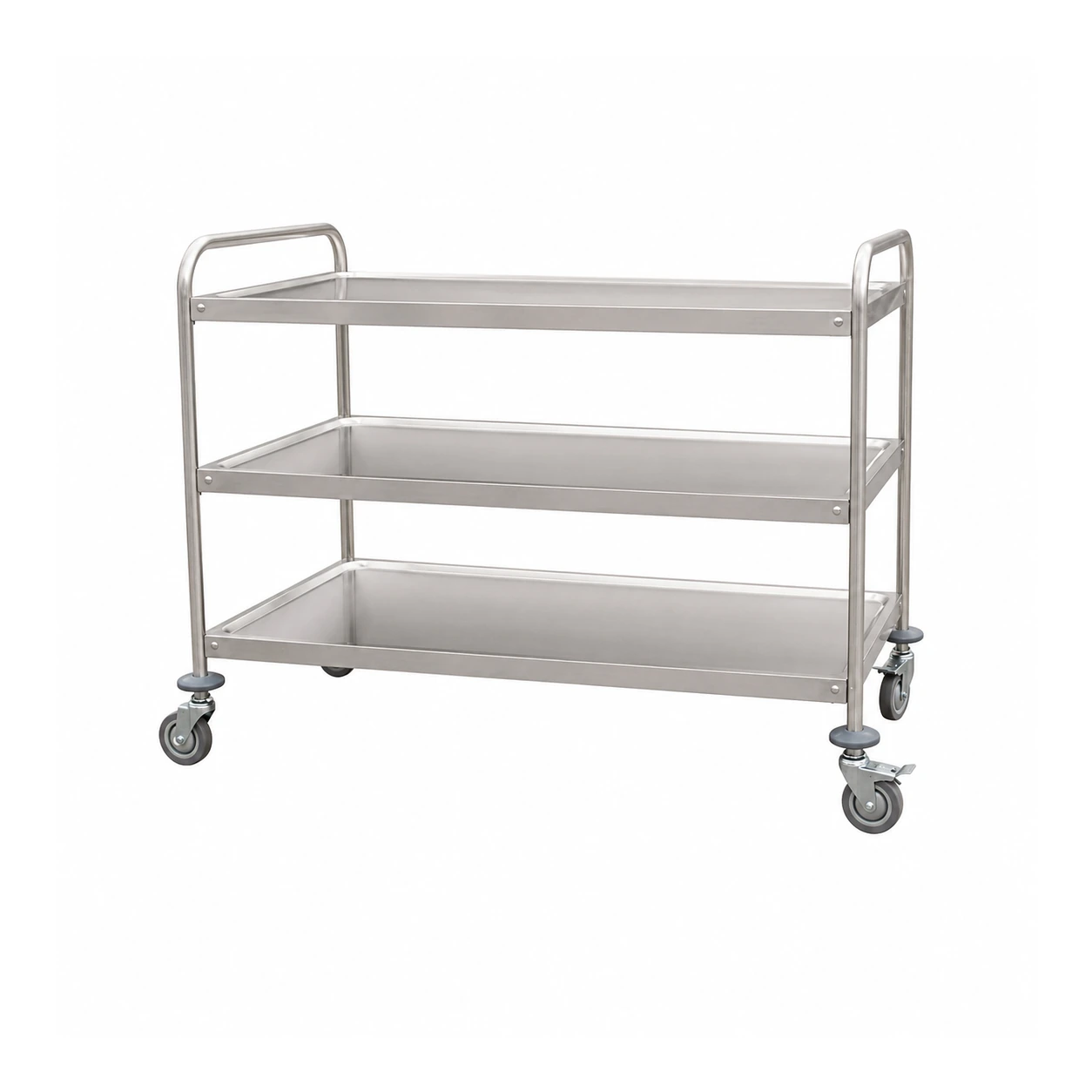
Shelves, platforms and collection
For plates, serviceware and boxed supplies, compare multi-tier utility carts with open flat platforms or dedicated dish and waste-collection designs.
Compare stainless steel trolley series →24 layers / double-column
30 layers / double-column
Catalog tray reference, verify actual fit
Listed material options, confirm selected grade
Understand the bakery rack differences
These are the model references currently listed on the Guangjie product page. Overall dimensions and layer arrangements must be checked against the actual route, trays and operating requirements; they are not load capacity ratings.
BPC-24G
- 24 layers arranged 2 × 12
- Catalog overall size: 785 × 460 × 1900 mm
- Tray reference: 350 × 450 mm
- Confirm guide spacing, wheels and loading limits
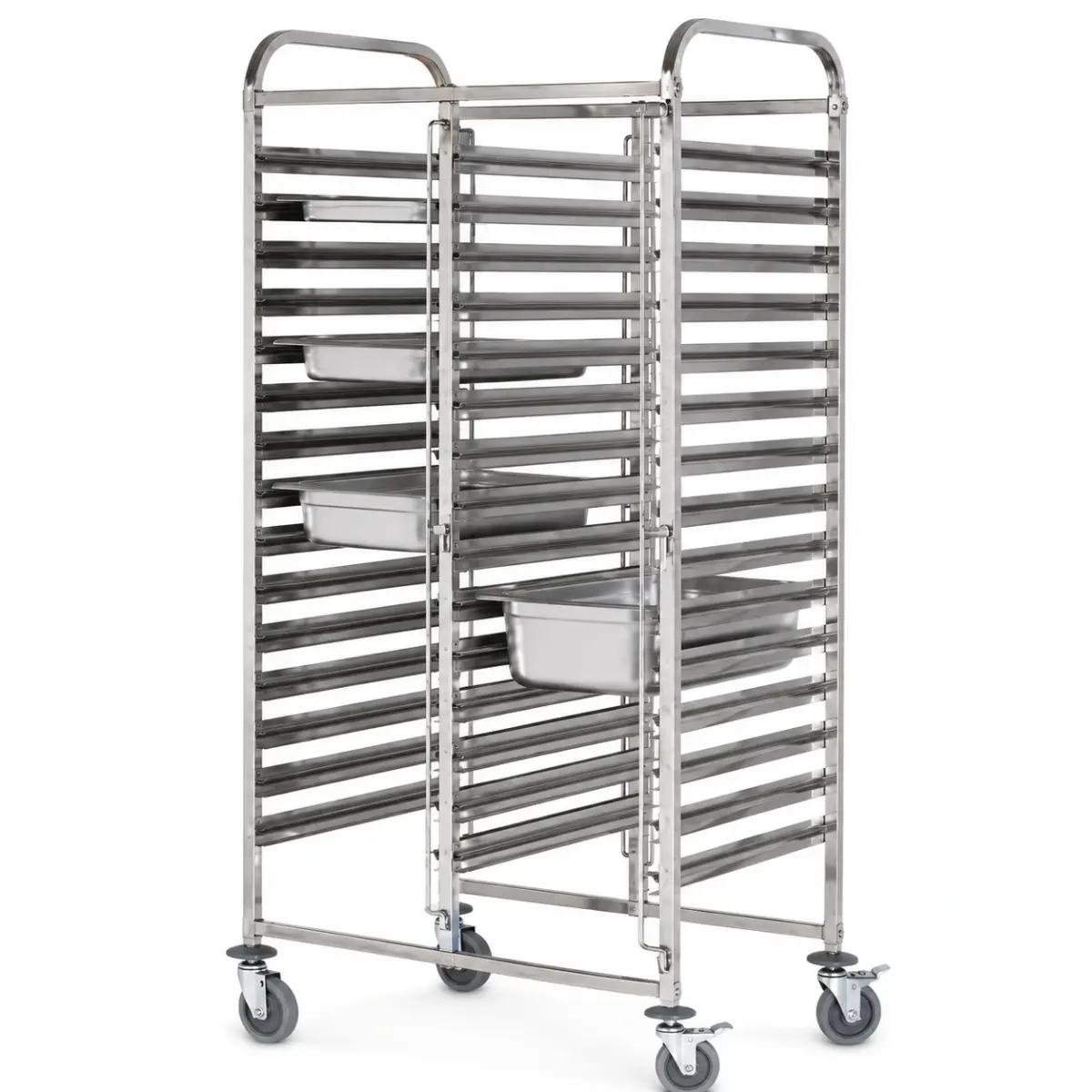
BPC-30G
- 30 layers arranged 2 × 15
- Catalog overall size: 550 × 745 × 1735 mm
- Tray reference: 350 × 450 mm
- Confirm guide spacing, wheels and loading limits
Dimensions and tray references are taken from the existing Guangjie product page. Do not interpret these dimensions as evidence that any other tray will fit.
Check the complete movement route
In bakery production or a central kitchen, the trolley needs to work through doors and corridors as well as beside equipment. Walk the actual handling route before releasing a specification.
Loading point
Check tray type, product handling method, intended working load and safe access to shelves.
Transport route
Measure doors, aisle widths, floor transitions and turning space with the loaded trolley.
Workstation arrival
Review where staff will stop, lock wheels where specified and unload without blocking access.
Wash and store
Confirm cleaning procedures, corrosion exposure and the available storage footprint.
Match the construction to the work
| Format | Application example | Buyer must confirm |
|---|---|---|
| Bakery tray rack / BPC | Tray staging, movement and temporary storage | Tray dimensions, number of guides, wheel specification, permitted load |
| TLT / DLT shelf trolley | Tableware and general kitchen service | Shelf dimensions, load, handling height and hygiene needs |
| PB / PBC flat trolley | Cartons, ingredients or larger items | Platform dimensions, wheel load and floor conditions |
| Dish collection / cleaning trolley | Dining return and cleaning workflow | Compartment arrangement, contamination separation and cleaning access |
For trolley categories not related to bakery trays, the TLT, DLT, PB, PBC and collection trolley family provides product examples. Confirm performance, payload and castor design for the selected model in writing.
Shortlist Trolleys by the Handling Job
For routine kitchen movement, dish return and flat-platform transport, start with these published model pages. Each is tied to an existing Guangjie catalog image and records only confirmed model information; ask for a current drawing and safe working load before ordering.
Multi-level movement of kitchen supplies and serviceware.
Two-level format for dish and tableware returns.
Flat platform and storage considerations for a foldable format.
Dedicated baking tray handling and guides.
Use one sample tray and one route record to approve the rack
A catalogue tray size and an overall rack size answer different questions. Before freezing the purchase order, agree how the trays will sit on the guides, where the assembled rack must travel and what loads the supplier will confirm in writing. Record the model and drawing revision against the same intended use so the approved rack is the one that gets ordered.
Send one actual tray or a dimensioned drawing that shows the maximum outside dimensions across the rim, the depth, and the lip or rolled edge that will bear on the guides. Mark the intended insertion direction and state whether the tray will carry a cover or a product that extends above the rim. Ask the supplier to confirm the guide opening, support and clearance for that tray, not just the nominal size printed on a label.
Record the narrowest clear opening, the tightest turn and any threshold or lift on the intended route. Include the point where operators need room to load and remove trays. Ask the site team to review the proposed assembled envelope and castor layout, taking account of turning and any projections when the trolley is used as intended. Do not treat a straight doorway measurement as approval for the full route.
Give the supplier the maximum intended loaded mass per tray and the combined load carried by the rack. Ask for a written working-load confirmation for the selected configuration, with any loading or distribution limits, and confirm castors and brakes in the same drawing revision. Agree whether approval will use a drawing, a trial with the buyer’s tray, or both; name who accepts each item before shipment.
RFQ line to copy: “Please confirm fit for the attached tray drawing, acceptable working loads per tray and for the complete trolley, and the assembled dimensions and castor configuration on one dated drawing. Our narrowest clear opening and tightest turn are shown in the route record.”
What to send for accurate pricing
Common selection questions
Does a 350 × 450 mm tray reference guarantee every tray will fit?
No. Guide clearance, rim profile, tray thickness and support details should be checked against the buyer’s actual trays.
Are the model layer counts the same as allowable load ratings?
No. Layer count is not a load rating. Confirm the permitted mass per tray and the total safe trolley load for the selected configuration.
Which material is appropriate for cleaning and foodservice conditions?
Specify the intended cleaning routine and environmental exposure, then confirm the available stainless steel grade and finish with the supplier.