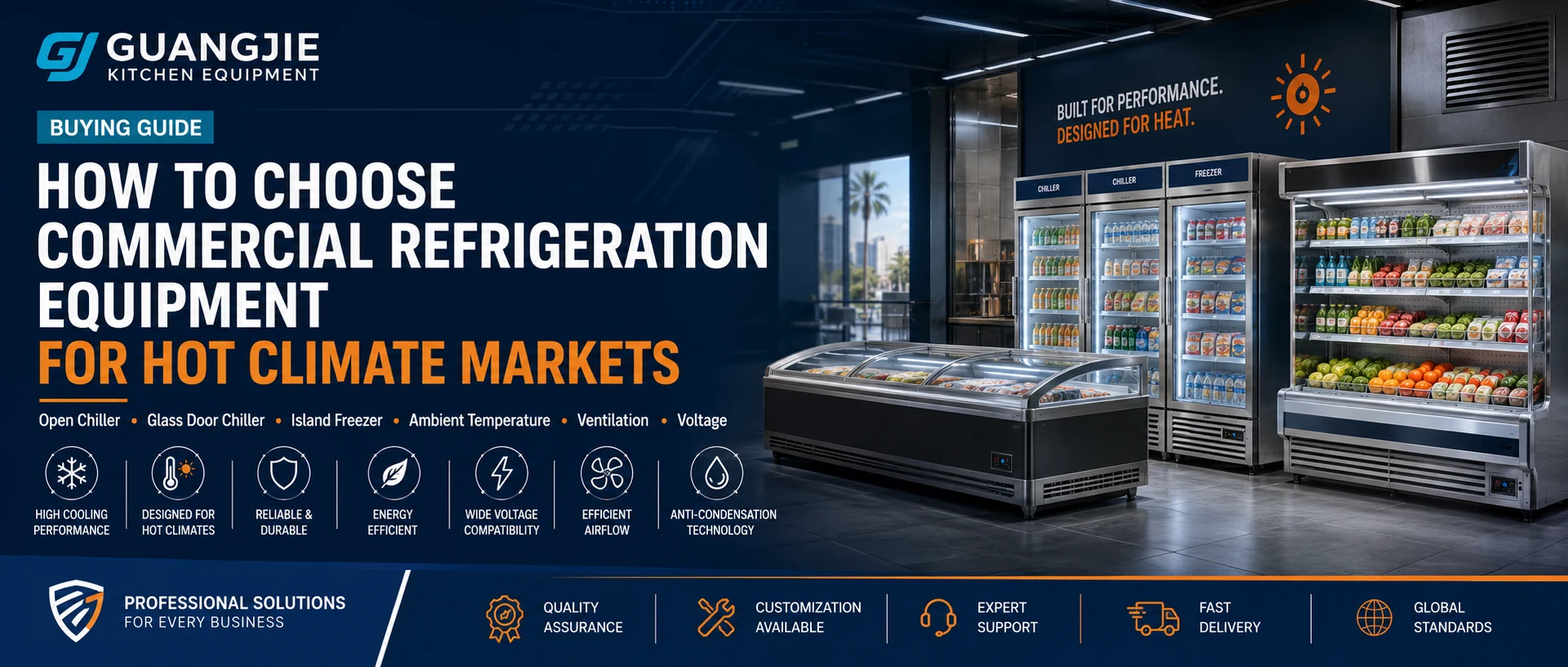
In hot climate markets, commercial refrigeration equipment must be selected according to more than cabinet size and display style. Buyers should confirm the local ambient temperature, store air-conditioning condition, product category, cabinet structure, ventilation clearance, voltage and export requirements before choosing open chillers, glass-door refrigerators, island freezers or refrigerated display cabinets.
- What is the highest local ambient temperature?
- Is the store air-conditioned during business hours?
- Which products need chilled or frozen display?
- Should the cabinet be open-front or glass-door?
- What voltage, frequency and plug standard are required?
Why Hot Climate Markets Need More Careful Refrigeration Selection
Commercial refrigeration equipment is used continuously in supermarkets, convenience stores, bakeries, cafés, hotels and foodservice projects. In hot climate markets, the cabinet may face higher ambient temperature, unstable store cooling, stronger door-opening frequency and more difficult maintenance conditions.
This means buyers should not choose refrigeration equipment only by appearance, catalogue size or price. A suitable cabinet should match the product temperature requirement, store layout, ventilation clearance, climate condition, electrical standard and long-term operating pattern.
Practical rule: for hot-climate projects, always send the supplier your maximum local ambient temperature, store type, product category, required temperature range, voltage and available installation space before final quotation.
A Practical Route for Choosing Commercial Refrigeration Equipment
A clear selection route helps buyers avoid choosing the wrong cabinet type. The following process is suitable for distributors, supermarket contractors, restaurant equipment buyers and overseas foodservice projects.
Supermarket, convenience store, bakery, café, restaurant, hotel or foodservice project.
Frozen food, beverages, dairy, cakes, cold dishes, salads or prepared food.
Confirm whether the goods require chilled display, frozen storage or special food presentation.
Choose open chiller, glass-door chiller, island freezer, cake cabinet or prep table.
Check size, condenser ventilation, voltage, plug, packing and destination country.
Which Cabinet Type Is Better for Hot Climate Markets?
There is no single cabinet type that fits every project. The right choice depends on the product category, sales model, store airflow, temperature stability requirement and operating environment.
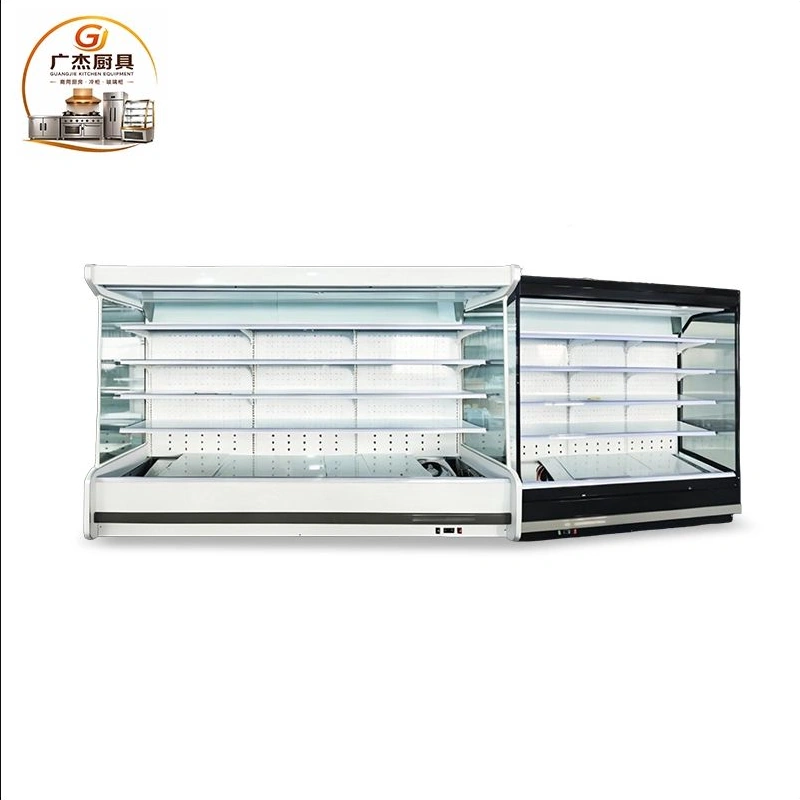
Suitable for high-traffic retail areas where customers need easy access to chilled goods.
- Good product visibility
- Convenient customer access
- More sensitive to airflow and ambient temperature
- Common for drinks, dairy, fruits, vegetables and ready-to-eat food
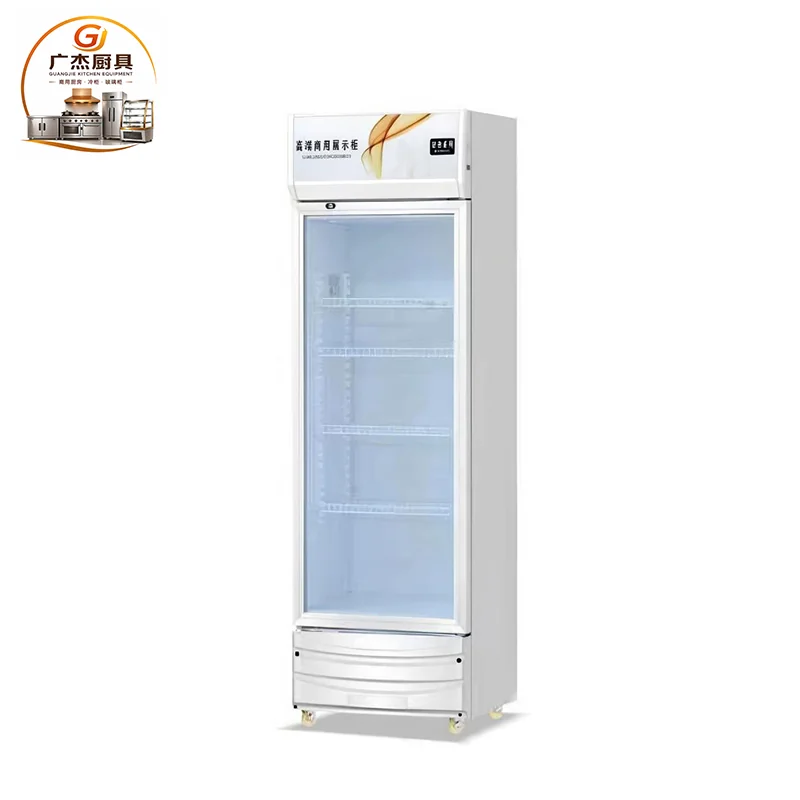
Suitable when the buyer needs better temperature stability and reduced warm-air exposure.
- Better separation from warm store air
- Suitable for drinks and packaged chilled goods
- More practical for some high-temperature markets
- Common in supermarkets and convenience stores
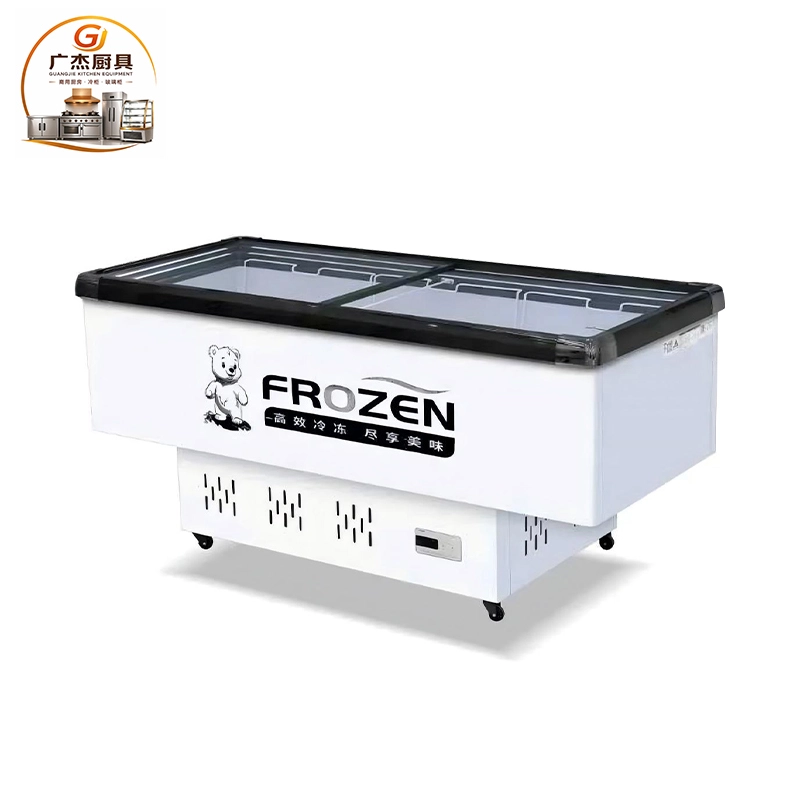
Suitable for frozen-food zones where horizontal display and easy picking are required.
- Good for frozen food and promotional display
- Suitable for meat, seafood, ice cream and dumplings
- Requires aisle planning and floor space
- Common in supermarkets and frozen-food sections
Key Technical Points to Confirm
Hot climate projects require more careful confirmation of real operating conditions.
- Ambient temperature and humidity
- Store air-conditioning condition
- Condenser ventilation clearance
- Daily door-opening or customer access frequency
- Voltage, frequency and local electrical standards
Do not only provide the country name. Provide the highest local temperature near the installation site.
Cabinets need enough space for heat discharge. Poor ventilation may reduce operating stability.
Different foods require different display or storage temperature ranges. Confirm before quotation.
Voltage, frequency and plug type should be confirmed before production for export orders.
Information to Send Before Asking for a Quotation
A complete inquiry helps the supplier recommend the right commercial refrigeration equipment faster and reduces repeated communication.
Related Commercial Refrigeration Equipment from Guangjie
Guangjie supplies commercial refrigeration equipment for supermarkets, convenience stores, bakeries, cafés, restaurants, hotels and foodservice projects. Buyers can choose different cabinet types according to store layout, display style, temperature range and product category.
Refrigerated display cabinets, cake cabinets, cold dish cabinets, wine cabinets and refrigerated prep tables for foodservice projects.
View Category → Frozen Food Commercial Flat Glass Island FreezerSliding-glass horizontal display freezer for frozen food, meat, seafood, ice cream and supermarket retail zones.
View Product → Bakery Display Cake Display Cabinet SeriesRefrigerated cake display cabinets for bakeries, cafés, dessert shops, hotels and supermarkets.
View Product →Choose by Operating Conditions, Not Only by Cabinet Appearance
For hot climate markets, commercial refrigeration equipment should be selected according to real operating conditions. The same cabinet type may perform differently in a well air-conditioned supermarket, a small convenience store, a bakery near the entrance or a project with limited ventilation clearance.
Before confirming the model, buyers should send complete project information to the supplier. This allows the supplier to check whether an open-front air curtain chiller, upright glass-door chiller, island freezer, cake display cabinet or refrigerated prep table is more suitable for the project.
A hot-climate refrigeration RFQ must state more than the destination country
Use a cabinet-by-cabinet specification schedule. Climate suitability can only be judged after the manufacturer confirms the exact model’s operating envelope for the actual store, not from an island, open-front or glass-door appearance.
| Decision / Risk | Buyer to provide | Manufacturer to confirm |
|---|---|---|
| Maximum ambient / humidity | Provide the measured or design highest air temperature and relevant humidity at the cabinet location, including whether air-conditioning remains available outside trading hours | Request the model’s rated ambient/climate class, recommended operating limits and any performance restrictions; do not assign an unverified climate rating |
| Food temperature and operating duty | List actual products, target storage/display requirement, stock loading and the expected frequency of door or lid opening | Obtain current model operating-range evidence for the specified ambient conditions, temperature-control configuration and food suitability |
| Condenser and maintenance access | Show installation floor plan, unit spacing, nearby walls, heat sources, back-of-house access and cleaning/servicing route | Request ventilation and maintenance clearances, condenser configuration and service requirements from the selected model’s drawing/manual |
| Electrical and site acceptance | Provide country, voltage, frequency, phase, plug/connection, power availability, site access and planned operating hours | Verify true rated electrical input, start-up requirements where applicable, local approval documents, packed weights and installation/commissioning responsibility |
A listed cooling-capacity wattage is not a verified input-power or energy-use figure. Do not use a generic country climate or a product’s sales photo to infer a tested ambient temperature rating. Require model-specific written evidence before accepting an offer.
Need Help Choosing Commercial Refrigeration Equipment?
Send your store type, product category, required temperature range, cabinet size, ambient temperature, voltage, quantity and destination. Guangjie can help match suitable commercial refrigeration equipment for your project.
Get in Touch
Ready to confirm specifications, dimensions or project pricing?
Request Equipment Quotation →