Kitchen planning / buyer comparison
Freestanding Storage Racks vs Wall Shelves for Commercial Kitchens
A stainless steel shelf does not solve a storage problem unless its structure fits the equipment, wall and working route. Compare freestanding floor racks with wall-mounted shelves before preparing your kitchen equipment schedule.
Use this guide to frame an overseas project RFQ. Final installed load ratings, wall anchors and mounting methods require confirmation from the supplier and a competent installer.
Two Storage Structures, Two Installation Questions
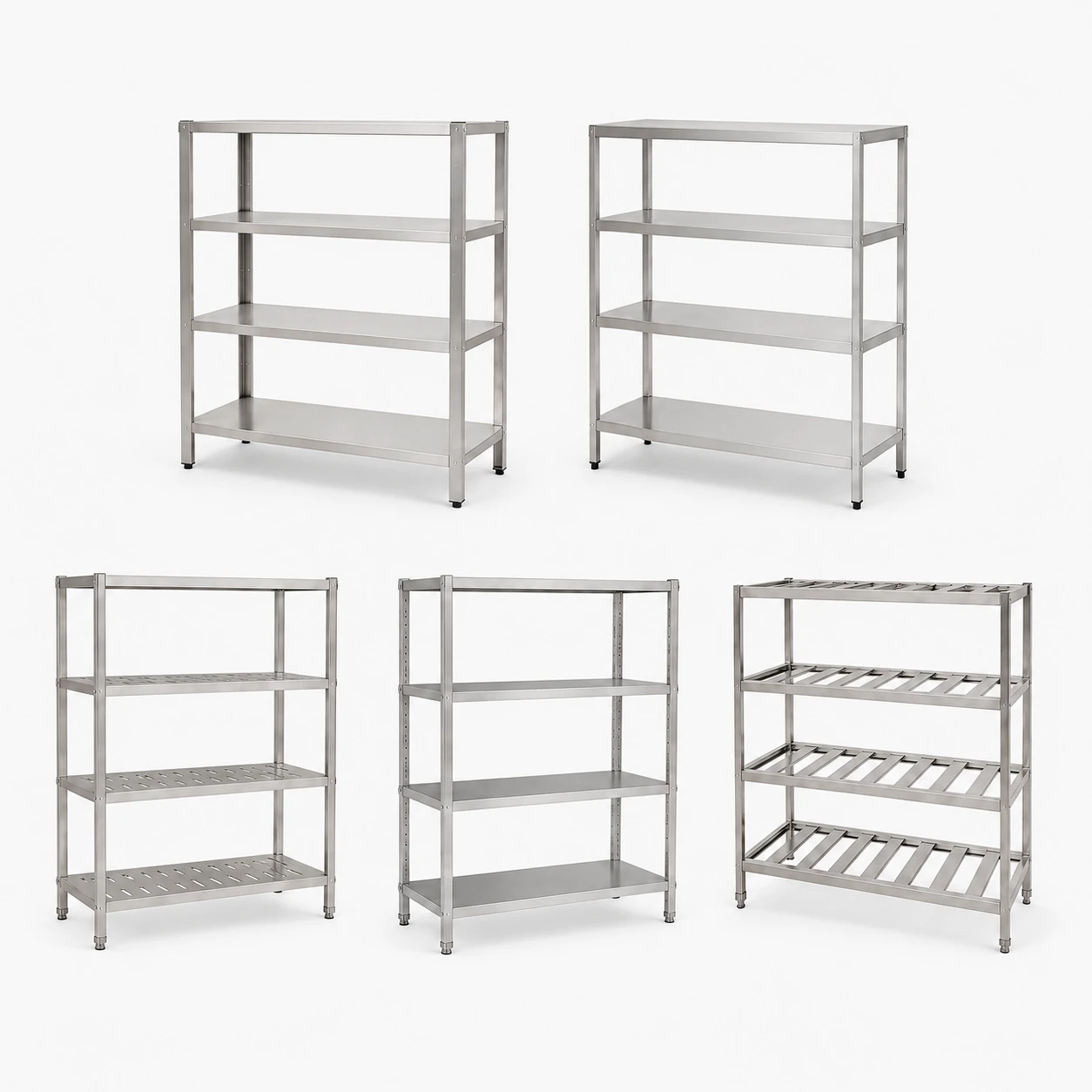
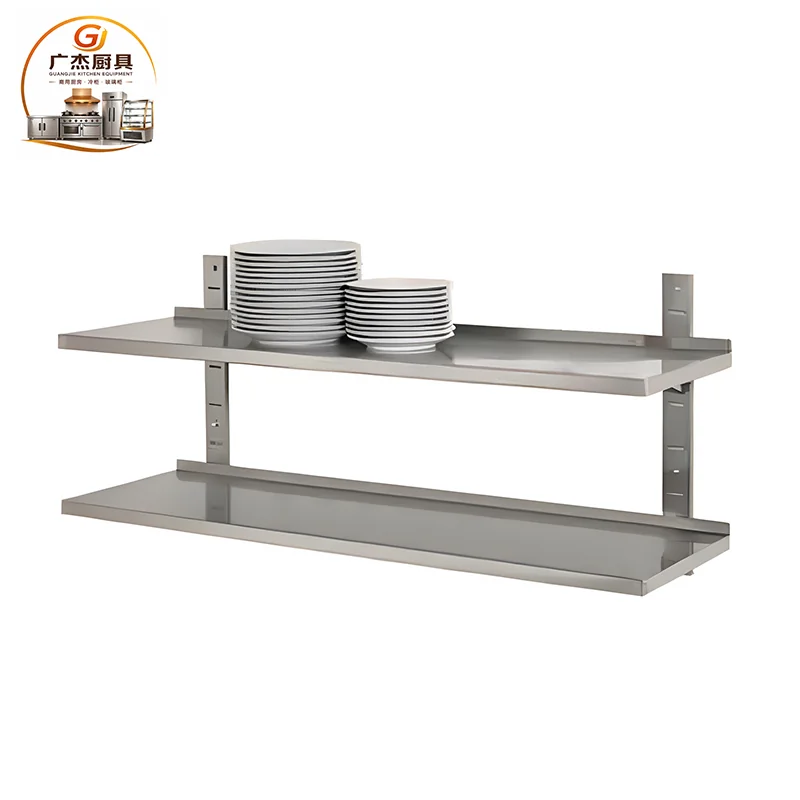
Freestanding racks occupy floor area but do not rely on a wall shelf bracket to support stored items. Wall shelves use available vertical wall space but need a suitable mounting substrate and verified fixing arrangements. The appropriate choice depends on what is stored and how people work around it.
Freestanding stainless steel rack
Consider a floor rack for shelves that need to move into a store room, preparation area or larger dedicated equipment position. Specify footprint, number of shelves, material and intended storage items; determine load limits for the exact model.
Single- or double-layer wall shelf
Consider wall storage above work surfaces or wash-up positions where floor space and movement paths should be preserved. Confirm wall construction, bracket spacing, fixing hardware, shelf depth and the allowable installed load.
Compare the Requirements, Not Just the Product Picture
| Procurement question | Freestanding storage rack | Wall-mounted shelf |
|---|---|---|
| Support structure | Supported by floor-level legs or frame; verify stability, feet and floor condition | Depends on wall, brackets and anchors; site fixing suitability must be verified |
| Occupied space | Needs floor footprint plus staff handling aisle | Uses wall elevation while leaving floor below potentially available |
| Storage format | Multiple shelf layers and flat, punched or open-bar structures by selected model | One or two shelf levels or tubular rail variants in published product families |
| Dimensional source | Catalog lists rack family lengths generally 1000–2000 mm and model-specific options | GQJ family lists seven lengths, 300/400 mm depths, single/double layers |
| Load safety | Confirm actual shelf and total rack working loads, leveling and restraint where applicable | Confirm wall substrate, fixing design, installed load and mounting heights |
| Hygiene and cleaning | Check access beneath and behind racks and the type of storage surface | Check cleaning behind wall fixings and access above counters or sinks |
| Export RFQ | Specify model, grade, layers, dimensions, quantity and packing | Add wall type, anchors/brackets, mounting drawing and installation scope |
Catalog values are not structural load certificates. Sheet thickness and dimensions alone cannot be used to calculate guaranteed safe working loads or wall fixing capacity.
Work Backwards from How the Storage Will Be Used
Wet washing area
Check access for cleaning, water exposure, item drainage and storage height. An open tubular wall shelf may merit consideration where its actual bracket and load design suits the installation.
Dry store and food prep
Check the dimensions of the cartons you will store, the floor load and the work aisle. Freestanding shelf and pan rack options include flat, punched, adjustable and ladder-style surfaces. If access to the room is tight, check the packed rack against the delivery route before finalizing the layout.
Compact station above a table
Check operator reach, overhead clearance and wall construction before selecting one or two wall levels. Do not position storage where it obstructs equipment access or a working aisle.
Confirm the Fixing, Load and Cleaning Requirements
For wall shelves, specify the mounting surface (for example masonry, concrete or a framed wall), available fixing area and any known restrictions on drilling. A qualified installer should select suitable anchors and verify the entire support path for the intended working load. A product’s nominal shelf dimensions do not establish the load that an existing wall can carry.
For floor-supported racks, review floor level, floor strength, rack stability, usable shelf dimensions and the cleaning access around the rack. Consider whether a rack will be positioned close to kitchen equipment that requires maintenance or service space.
Both formats need the correct stainless steel grade and finish for the expected operating and cleaning environment. The published Guangjie families list SUS201 and SUS304 options on relevant models; confirm the exact grade and sheet thickness rather than assuming every configuration is available in each combination.
Storage Shelving Purchase Checklist
For wall shelf model-level details, the existing Commercial Kitchen Wall Shelves Buying Guide covers shelf sizing and wall-mounted buying considerations. This article focuses on the structure-selection decision between wall-supported and freestanding storage, rather than repeating that guide.
Questions Before Final Specification
Can a wall shelf save usable floor space?
It can move storage off the floor, but its wall support, available mounting height and safe installed capacity still need to be checked. It does not automatically suit heavier goods or every wall type.
What is the difference between the Guangjie GQJ wall shelf and a freestanding rack?
The GQJ page lists wall-mounted single- and double-layer shelf configurations with 300 and 400 mm depth options. The freestanding shelf and pan rack family lists multi-layer floor-supported options, including flat, punched, adjustable and ladder-style shelves. Compare exact model drawings and the project layout.
Can SUS304 be requested for a commercial kitchen shelf?
SUS304 is identified among the listed material options in the relevant Guangjie product families. Confirm its availability for the selected model, required thickness and finish before quotation.
Are published dimensions proof of safe loading?
No. Supplier product drawings, approved load limits and installation-site conditions are needed. Wall shelves additionally require confirmation of the fixing and wall support system.