
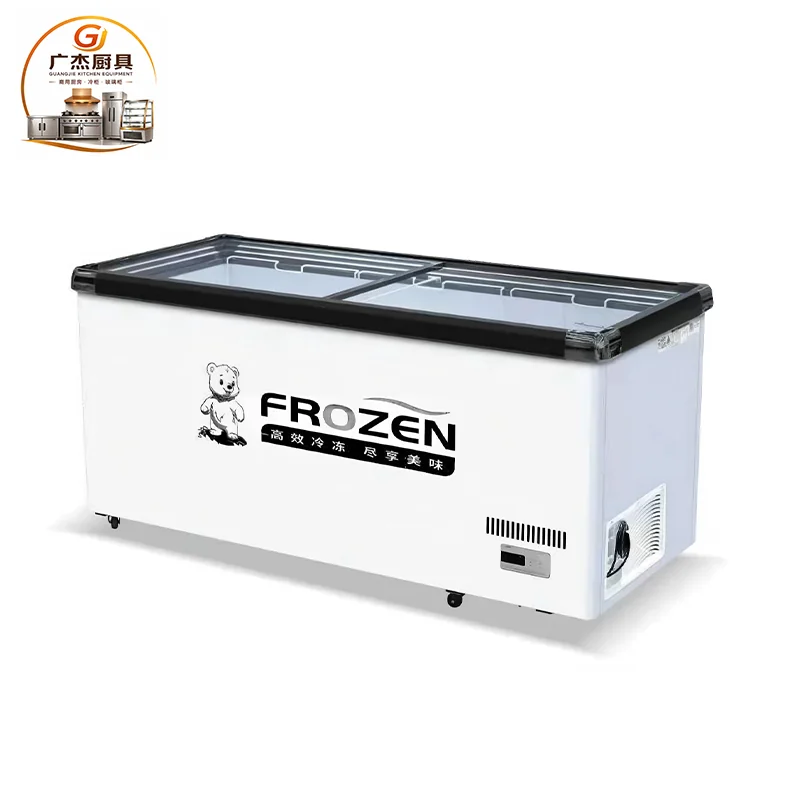
Commercial European Style Island Freezer
The commercial European island freezer layout provides sliding glass access for frozen food display in supermarkets and convenience stores. It is presented for seafood, meat, ice cream and packaged frozen products. Multiple cabinet sizes are available; confirm the dimensions and capacity of the selected model against the planned display run.
Island Format and Display Applications
The cabinet is shown with a sliding glass top for frozen food display.
Suitable for frozen food, seafood, meat, ice cream and packaged products.
Several sizes are available. Confirm the selected cabinet dimensions and display run for the store layout.
Product View
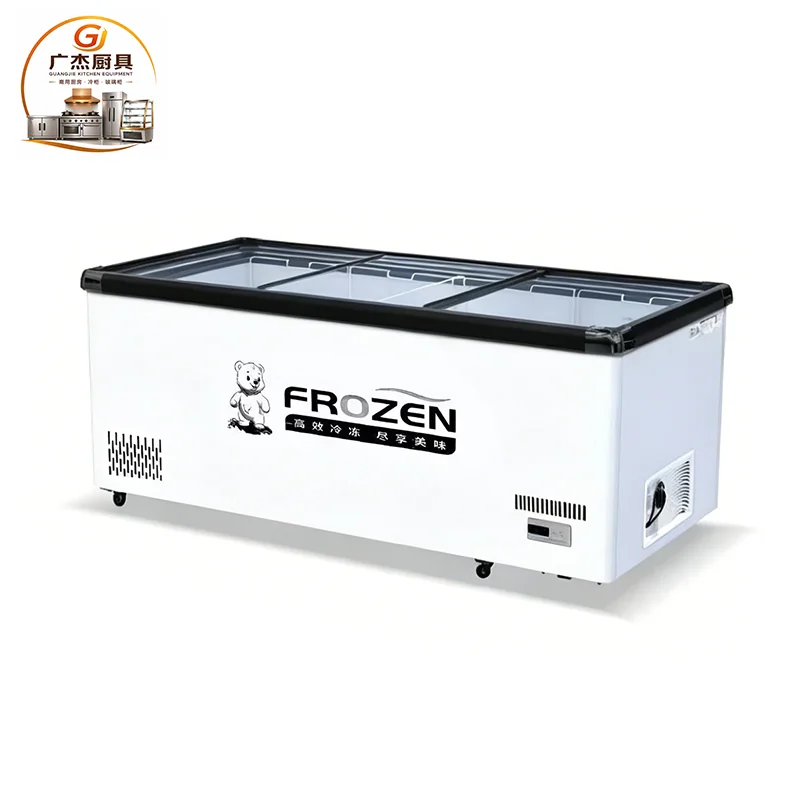
Commercial European Island Freezer: Planning Guide
Begin with the products planned for the freezer. List seafood, meat, ice cream and packaged frozen foods by package size, display quantity and restocking frequency. Use that assortment to define the shelf or basket arrangement and the capacity needed for the shift between deliveries. Ask the supplier to show the usable storage area and permitted loading for each model rather than relying on outside dimensions or a general size label.
The page states that several cabinet sizes are available but does not show a dimension table. Request a schedule with model codes, external length, width and height, usable display dimensions and capacity. Ask for a drawing of the selected cabinet and its sliding glass top. If more than one unit will be placed together, confirm the finished run, end treatment and spacing between cabinets before finalizing the store layout.
Plan customer and staff access around the sliding glass top. Confirm how the lid moves, which sides are used for customer selection and where staff will restock products. Measure the aisle around the cabinet with the lid in its normal operating position and during replenishment. Ask for instructions on cleaning the glass, handles and tracks, and check whether the lid must be moved or held in a particular way for cleaning and maintenance.
Place the cabinet on a measured store plan. Mark entrances, checkout queues, adjacent displays, columns, required walkways and the route staff use to replenish frozen products. Measure the full delivery route from unloading to the final location, including doorway widths, corridor turns, elevators and floor changes. Confirm floor preparation and service clearances with the installer, then review the proposed position with the store team before purchase.
Ask the refrigeration supplier for operating information for the exact cabinet size. Confirm the rated temperature range, ambient conditions, cooling-system arrangement, refrigerant, defrost method, condensate handling and any other technical requirements. None of those performance figures are stated here. Compare the supplier’s schedule with the storage requirements of the listed frozen products and the store’s available electrical and service provisions; do not infer them from the European style label.
Prepare for cleaning and routine operation. Request the manual, approved cleaning products and procedure, temperature-monitoring instructions, maintenance intervals, warranty details and a local service contact. Confirm how products should be arranged within the cabinet and whether any baskets or dividers are included or optional. Train staff on the manufacturer’s loading and cleaning instructions before the first stocking cycle.
For a clear quotation, share the required cabinet size, display run, product mix, preferred customer access, destination and measured delivery route. Ask the supplier to list the model code, included accessories, packed dimensions and weight, price, lead time, delivery terms and installation scope. Compare offers against the same drawing and technical information so each proposal represents a usable store layout.
Confirm these details for quotation
Share the required island length and the number or arrangement of cabinets.
List the products to display and the preferred customer access from each side.
Provide the store layout, delivery access and destination.