
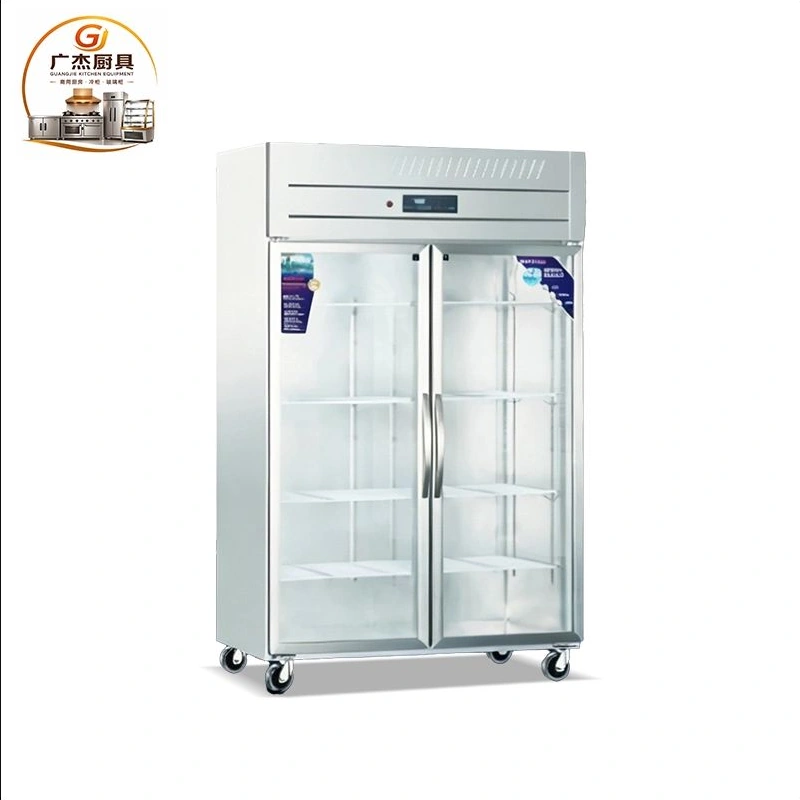
 2-door
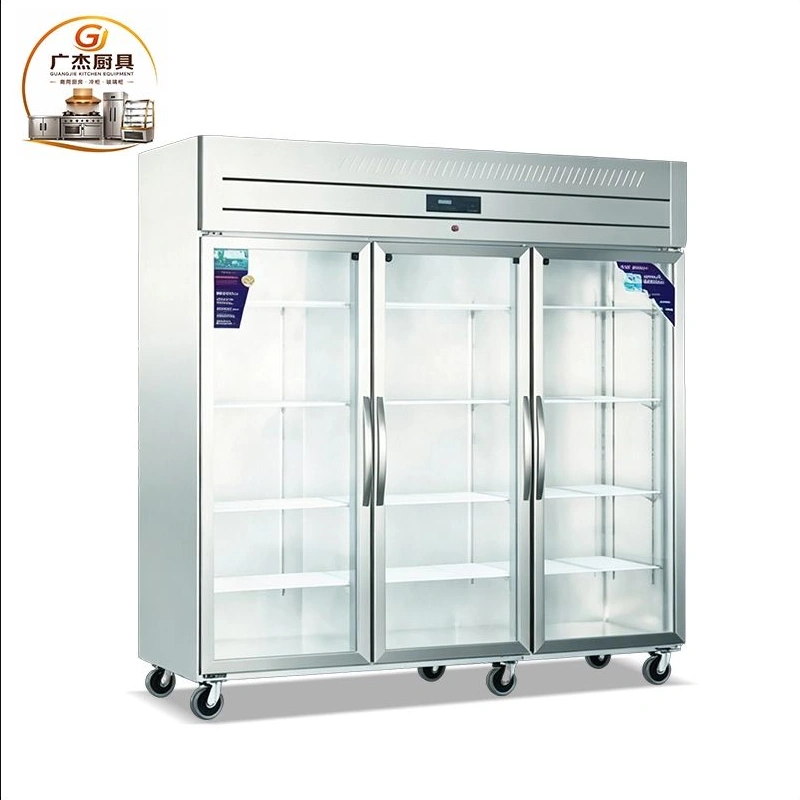 3-door
Commercial Stainless Steel Upright Glass Door Display Chiller
Stainless steel upright glass-door chiller for supermarkets, convenience stores, restaurants, bakeries and hotels. Choose a two-door or three-door model with multi-layer shelves; the listed cooling range is 0°C to 10°C.
Features and Cooling Range
Select two or three doors to match display volume and available floor space.
The listed range is 0°C to 10°C. Confirm the required temperature and operating conditions for the selected model.
Suitable for displaying beverages, dairy products, prepared food, ingredients and other packaged chilled products.
Two- and Three-Door Stainless Steel Display Chillers
Compare the two existing configurations in the stainless steel upright chiller range. The photos below are from the Guangjie media library; verify the exact dimensions and electrical specifications of the unit selected for quotation.
Two-Door Glass Display Chiller
Suitable for medium-width retail displays and compact beverage and prepared-food storage zones. Confirm the model drawing, temperature requirement, shelf arrangement, delivery access and local power standard.
Request two-door quotation →Three-Door Glass Display Chiller
For a longer display run with more merchandising frontage. Share required shelf levels, ambient conditions, full delivery dimensions and quantity for selection.
Request three-door quotation →Confirm these details for quotation
Door count and cabinet dimensions
Product range and shelf arrangement
Destination voltage, placement and delivery access
Choosing an upright glass door display chiller
An upright glass door display chiller combines visible product presentation with vertical chilled storage. This stainless steel series offers two-door and three-door configurations and lists a 0°C to 10°C range. Confirm the exact temperature range, cabinet dimensions and electrical rating for the chosen model before planning the store layout. The correct door count depends on the product assortment, expected stock level and available floor space.
Measure the installation area and allow room for doors to open, staff to restock and technicians to service the cabinet. Consider the width of customer aisles and the delivery route. Compare the usable shelf area and cabinet dimensions in the model drawing rather than estimating capacity from the number of doors.
List the package sizes and product categories you expect to display. Check the adjustable or included shelf arrangement for the exact model, then decide how beverages, dairy, prepared foods or ingredients will be grouped. Keep product labels visible and leave a practical path for replenishment and cleaning.
Verify that the selected model’s temperature range suits the products and handling procedure. Ask about the recommended ambient conditions, voltage, rated power, ventilation clearance and any site limitations. Confirm the manufacturer’s guidance for door use and cleaning in the climate where the cabinet will operate.
What to include in a quotation request
Provide the desired door count, product types, expected inventory, preferred shelf layout, destination, available floor dimensions and electrical supply. Share whether the chiller will sit in a customer-facing aisle or a back-of-house area, and note any narrow entrances or delivery restrictions. A floor plan or photograph can help check door swing and service access.
Before ordering, request the model-specific technical sheet and drawing. Confirm external and internal dimensions, usable capacity, operating range, rated power, included shelves, stainless steel construction details, warranty, service arrangements and delivery terms. Clarify if unloading, installation or commissioning is included, and prepare the site to match the confirmed requirements.
Keep chilled products easy to find
Arrange products by category and turnover so staff can replenish shelves consistently. Avoid blocking any designed air path or loading beyond the manufacturer’s instructions. Keep price labels and product information visible through the glass, and use the cleaning method recommended for the cabinet’s materials. The manufacturer can advise whether the site’s temperature and humidity may affect glass visibility during operation.
At installation, record the approved temperature setting and show operators how to read the controls and report unusual operation. Include routine cleaning, temperature checks and escalation steps in the store procedure, following the requirements that apply to the products being stored.
Glass door display chiller questions
The series lists 0°C to 10°C. Confirm the exact operating range for the model and product application before ordering.
Compare the model drawings, available installation width, display capacity and customer traffic. Door count alone does not determine usable storage volume.
Check dimensions, doorway access, door clearance, ventilation, electrical supply and whether installation or unloading is included.
Confirm the stainless display cabinet’s actual working space
This series presents two-door and three-door glass display formats with a listed 0–10°C cooling range. Cabinet appearance and door count do not establish the usable shelf area, operating conditions or rated power for a particular offer.
Two-door configuration
Plan the store footprint, loading direction, customer or staff access, shelf layout and full door travel. Request the exact cabinet drawing.
Three-door configuration
Check the wider aisle requirement, replenishment route, shelf loading and the doorway/lift dimensions needed for delivery.
Model release evidence
Confirm SUS grade and finish, rated voltage/frequency/power, operating range, refrigerant, ambient conditions, included shelving, packing and any local certification requirements.
For foods with regulated storage needs, confirm the selected model and the operator’s temperature procedures; the family-level 0–10°C reference alone is not a product-safety approval.