
News Center
Commercial beer display cases on the market primarily use two types of cooling systems: direct cooling and air cooling. The choice between the two directly determines the temperature performance inside the cabinet, the amount of maintenance required, and the unit’s long-term energy consumption.
The cooling method used in direct-cooling beer cabinets is similar to that of older-style home refrigerators. The evaporator is mounted directly on the inner walls of the cabinet, transferring cold air through natural convection via its low-temperature surface. This design is simple, cost-effective, and operates quietly. It offers a clear cost-performance advantage in scenarios where temperature requirements are relatively straightforward and tolerance for fluctuations is high. Many inexpensive single-door beer cabinets found in traditional convenience stores and supermarkets utilize direct cooling technology.
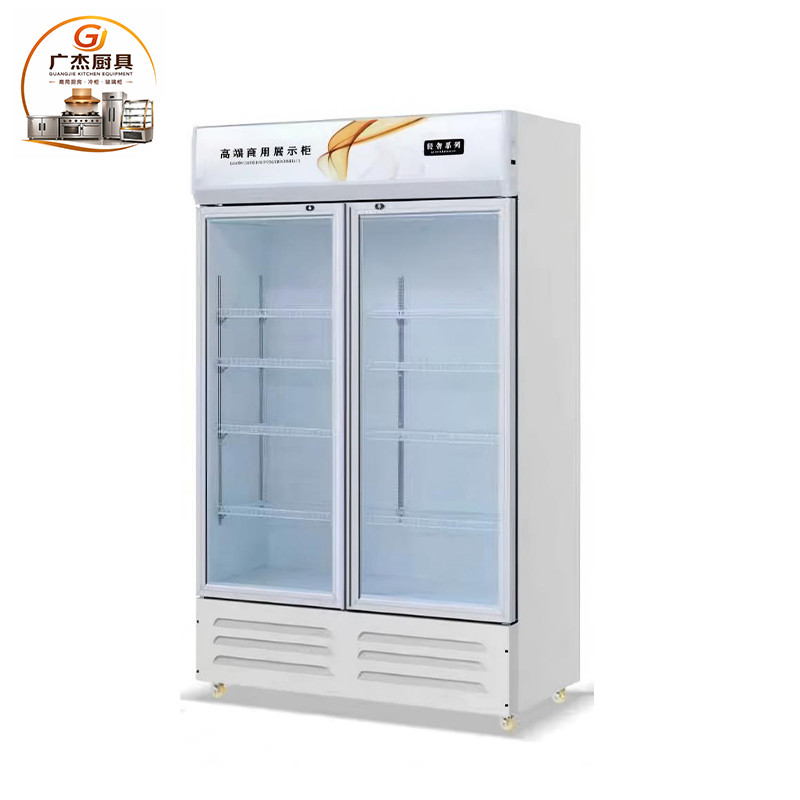
However, the drawbacks of direct cooling cannot be overlooked—namely, uneven temperature distribution. Temperatures are lower near the evaporator and higher in areas farther from the cooling source, with vertical temperature differences reaching as much as 4°C to 6°C. The direct result is that beers on the upper shelves are at the ideal temperature, while those on the lower shelves are frozen to the point of losing their flavor; if a bottle of craft beer is left near the cooling source for an extended period, the rate at which it loses its flavor will far exceed your expectations.
Air-cooled beer cabinets solve this problem using a different principle. The interior features a finned evaporator and air duct circulation components; a fan forces cooled airflow throughout the cabinet, creating uniform air circulation and keeping temperature fluctuations within ±0.5°C. At the same time, the air-cooled system features automatic defrosting capabilities—the evaporator automatically initiates the defrost cycle based on frost buildup. In contrast, direct-cooled beer cabinets require manual defrosting by disconnecting the power. During the frequent opening of the door for manual defrosting, the internal temperature can easily rise by more than 10°C, severely compromising both the taste and shelf life of the entire batch of beer.
Consequently, in commercial settings, air-cooled beer cabinets are increasingly becoming the preferred choice for businesses. Although air-cooled models cost 15% to 30% more than direct-cooled units of equivalent capacity, and the operation of the fan adds 3–5 decibels of noise, their temperature uniformity, frost-free and maintenance-free convenience, and consistent performance in preserving beer flavor more than justify the investment over the entire lifecycle.
For business owners planning to upgrade their beverage sales equipment, from now on, the focus when considering beer cabinets should no longer be merely on whether they “keep things cold,” but rather: “Is the temperature accurate in every shelf and every corner?”