News Center
In the food service market, whether it’s authentic Sichuan-Chongqing-style chuanchuan hot pot or delis specializing in casual braised dishes and cold cuts, one compact yet powerful piece of equipment is indispensable: direct-cool display cabinets (such as chuanchuan cabinets, cold cut cabinets, and island cabinets). While air-cooled display cabinets prioritize the technical stability of “constant temperature,” direct-cool display cabinets focus on preserving the freshness and flavor of ingredients.
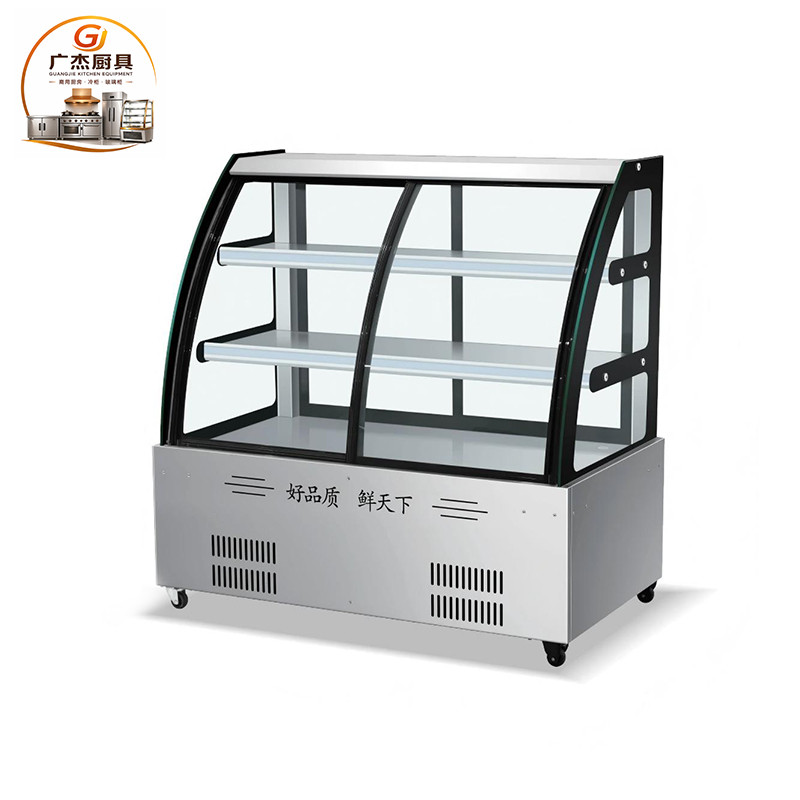
The operating principle of direct-cool display cabinets is fundamentally different from that of air-cooled equipment. At its core, evaporator pipes are arranged in a loop along the inner walls of the cabinet, allowing cold energy to act directly on the ingredients through metal heat conduction, without the need for fans to circulate air. This design offers several significant advantages:
First, the preservation effect better preserves the natural texture of the ingredients. Since there is no forced airflow during the cooling process, the various meatballs, vegetables, and meat skewers in the hot pot display cabinets do not become shriveled or dehydrated from direct exposure to cold air, retaining their tenderness and juiciness; similarly, when serving various braised dishes and cold salads in the cold dish cabinets, the surface of the dishes does not become dried out or hard. This “zero-draft” cooling effect provides an experience closer to that of a home refrigerator than air-cooled cabinets, making it more suitable for fresh ingredients that require high moisture retention.
Second, noise control is superior. Direct-cooling hot pot cabinets and cold dish cabinets produce no fan noise, which is particularly valuable in dining environments like hot pot restaurants where customers linger for extended periods—without mechanical noise interference, the dining experience naturally improves.
Third, the design is simple and the failure rate is low, resulting in significantly lower maintenance costs than fan-cooled equipment. This makes them particularly suitable for small and medium-sized restaurants without dedicated maintenance staff.
Of course, direct-cool display cabinets are not without their drawbacks. A common issue consumers encounter is condensation and frost buildup. When there is a significant temperature difference (especially during the rainy season or when customers frequently open the cabinet doors), condensation droplets can form on the cabinet walls, causing ingredients to come into contact with water and affecting their appearance; After prolonged operation, a thickening layer of frost on the evaporator coils can significantly reduce cooling efficiency. If not defrosted promptly, this can create the false impression that the unit has “stopped running but is not cooling.” Therefore, equipping direct-cool display cabinets with a “one-touch automatic defrost” or timed defrost system is crucial—running the automatic defrost program after closing at night ensures the equipment returns to optimal cooling condition before the next day’s business hours.
When selecting skewered food display cabinets or cold dish cabinets, special attention should also be paid to the following three details: First, whether the interior shelves are adjustable to accommodate food containers of varying heights; second, whether the temperature control system features independent microcomputer digital display control to prevent cross-contamination of flavors—this is particularly important for establishments that store both spicy skewered dishes and plain cold dishes; Third, whether the sliding glass doors or top cover are made of high-transparency double-pane insulated glass, ensuring both excellent thermal insulation and optimal product display.
Overall, direct-cooling display cabinets, with their characteristics of “zero drafts, low power consumption, and superior freshness retention,” hold an irreplaceable position in niche settings such as skewer restaurants and cold dish shops.