
News Center
In supermarkets and open-concept convenience stores, modular island display cases and air curtain display cases are two indispensable types of core refrigeration equipment. Island cabinets are typically placed in the center aisle of supermarkets to allow customers to access products from both sides. When combined and linked together, they form a continuous, high-capacity display area, primarily used for storing frozen meats, dumplings, tangyuan, or ice cream. Air curtain cabinets, on the other hand, are positioned directly next to shelving areas. Their open-front design attracts customers’ attention, making them frequently used for displaying beverages, milk, yogurt, and cut fruit.
However, any operator with experience in supermarket management is well aware of a grim reality: while open displays may be visually appealing, they consume a significant amount of energy. Research data indicates that refrigerated display cabinets account for approximately 50% of a supermarket’s total energy consumption, and about 70% of this cooling loss stems from heat exchange between the air curtain and the external environment. In other words, for every 1 kWh of electricity consumed by an open-style air curtain cabinet for cooling, only about 0.3 kWh is actually used to maintain food temperature, while the remaining 0.7 kWh is “wasted”—this portion of the electricity bill is solely for maintaining the air curtain. Therefore, the significance of choosing a high-quality air curtain cabinet goes far beyond the purchase price of the equipment.
So, what technical measures does a high-quality air curtain cabinet employ to combat this “high energy consumption”? First, the cabinet structure itself must possess excellent thermal insulation properties—the outer shell consists of cold-rolled steel plates coated with eco-friendly powder paint, filled with a layer of high-density polyurethane foam, and the internal food-contact components comply with the GB 4806 series standards. In terms of air curtain design, an optimized top air outlet combined with appropriate airflow settings creates a “gradual laminar flow” distribution starting from the grille, effectively reducing the impact of ambient temperature and humidity on the cabinet’s temperature control. The evaporator and condenser fans utilize energy-efficient brushless DC motors (EC/ESM fans), which save approximately 35% or more in energy consumption compared to traditional AC motors.
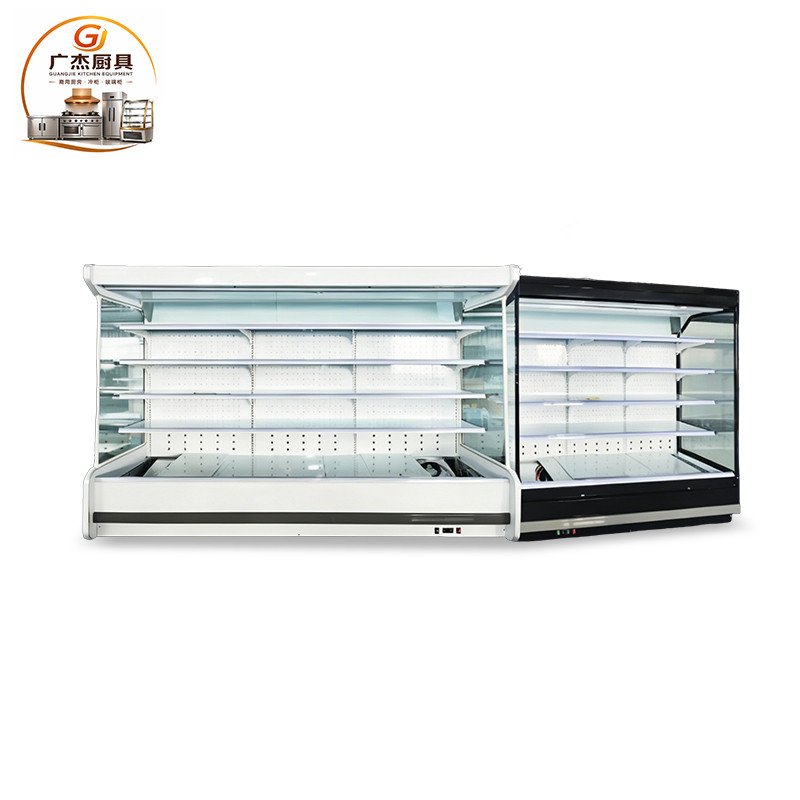
For modular island cabinets, the core design trade-offs differ. While island cabinets have relatively low energy consumption (due to the top being covered by sliding glass doors, which prevent cold air from escaping), they are at a disadvantage in terms of display effectiveness—after all, transparent glass covers do not allow customers to see all products at a glance as clearly as open-style air curtain cabinets do. However, in recent years, with the maturation of thickened double-pane tempered glass technology and LED cool-lighting technology, the visual appeal of modern island display cases has significantly improved. Combined with a well-designed lighting layout, they can achieve excellent display and promotional effects.
So, returning to the original question: Is it worth trading a 40% increase in electricity costs for 100% display and promotional impact? The answer is: It depends on your product category and sales strategy. For pre-packaged beverages and dairy products that require rapid turnover, the sales increase generated by the “instant appeal” of open-style air curtain cabinets can often easily offset the additional electricity costs. On the other hand, for products with longer turnover cycles and high price sensitivity—such as ice cream and frozen meat—combination island cabinets with lower energy consumption are a more rational choice. Both types of equipment have their own strengths; the key lies in whether the operator can align their business model with the characteristics of the equipment.