
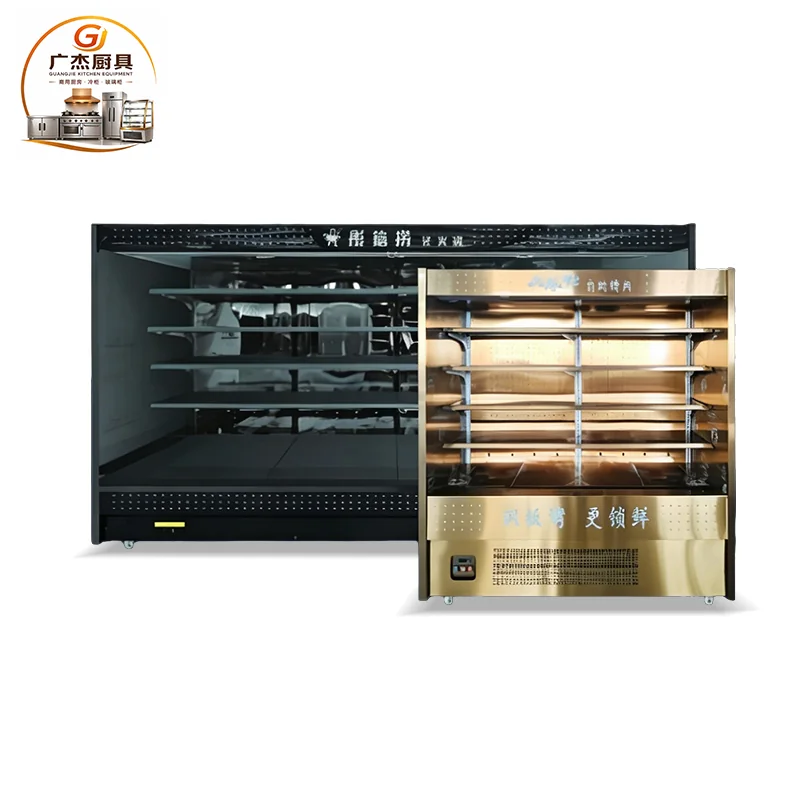
Commercial Stainless Steel Air Curtain Open Chiller
Commercial stainless steel air curtain open chiller for supermarkets, convenience stores, beverage shops and fresh-food retail. Plan the products, cabinet run, material requirements and store conditions with the supplier before ordering.
Open Display and Cooling Setup
Open-front presentation keeps chilled products visible to customers.
The product description identifies air curtain cooling for chilled display.
Confirm product mix, cabinet length and store conditions for the selected setup.
Stainless Steel Commercial Air Curtain Chiller: Material and Site Guide
Start by listing the products the cabinet is expected to hold and display. Record package sizes, the number of facings, the display quantity and how often staff will replenish stock. Match the shelf plan to these products and the daily restocking routine. Ask for the usable shelf dimensions, permitted loads, any shelf-position options and clearances for the exact model; these figures are not published on this page.
Confirm what “stainless steel” covers in the quoted cabinet. Request a material schedule that identifies the interior surfaces, exterior panels, shelves, supports, trims and other relevant components separately. Ask the manufacturer to state the steel grade, surface finish, sheet thickness and construction details for each part. This helps the project team compare quotations consistently and determine whether the proposed finish suits the intended retail environment and cleaning routine.
Discuss the cleaning method before selecting the finish. Ask which cleaning products and tools are approved, whether shelves or panels can be removed, and how staff should clean joints, corners and hard-to-reach surfaces. Confirm how the finish should be dried and protected during normal maintenance. If the store uses frequent wash-downs or operates in a humid or otherwise demanding environment, describe those conditions so the supplier can confirm the appropriate materials and care instructions.
Measure the cabinet position and delivery route. Mark nearby counters, aisles, columns, entrances and customer circulation, then allow for staff restocking and technician access. Measure doorways, corridors, lifts and turns from the unloading point to the final position. Request a dimensioned drawing showing cabinet length, depth, height, end panels, joining details and service clearances. Confirm how multiple cabinets connect and whether the planned run needs any finishing pieces.
Ask the refrigeration supplier to provide the operating conditions for the selected model, including its rated temperature range and the ambient temperature and humidity it is designed for. Discuss nearby entrances, direct air movement, lighting or other heat sources and expected customer traffic. Compare the proposed cabinet with the storage requirements of the planned food products. Do not infer a safe storage temperature or performance limit from the stainless-steel construction or product name.
Obtain the complete technical schedule before preparing the site. Confirm voltage, frequency, phase, rated power, cooling-system arrangement, refrigerant, defrost method and condensate handling. Ask where service components are located and what electrical, drainage, ventilation and maintenance access they require. These specifications are not provided here, so have the installer review the supplier’s documentation against the store’s available services before purchase.
For day-to-day operation, request the manual, recommended cleaning routine, temperature-monitoring procedure, maintenance interval, warranty conditions and replacement-parts contact for the selected model. Confirm loading limits and product placement so stock does not block the air path. For a complete quotation, include the material schedule, shelf plan, cabinet run, destination, access measurements and requested options; ask each supplier to list the model code, accessories, delivery, installation and commissioning scope.
Confirm these details for quotation
List the products to display and the required cabinet length.
Provide ambient conditions and the intended chilled display temperatures.
Share installation access, delivery destination and service requirements.