
This commercial kitchen sink buying guide explains how to select bowl quantity, overall size, bowl depth, drainboard direction, stainless steel grade, undershelf structure and dishwasher space for restaurant and catering projects.
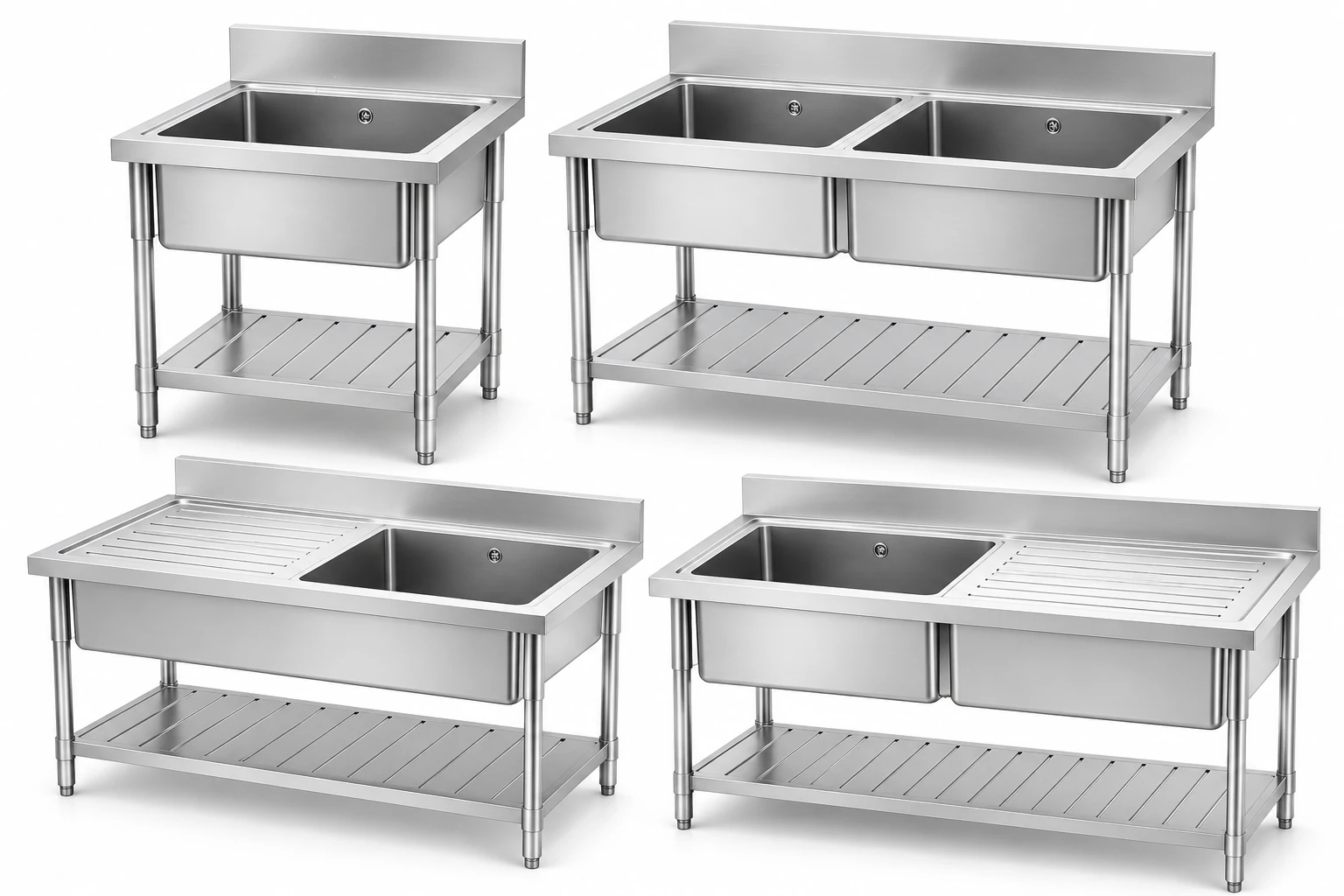
The Correct Sink Follows the Workflow
When deciding how to choose a commercial kitchen sink, begin with the items being washed, the required washing stages, available aisle space, water supply, drainage position and the equipment placed beside the sink. Bowl quantity and drainboard direction should follow the real operating sequence.
Pots, plates, trays, vegetables, meat and utensils create different bowl-size and hygiene requirements.
A double bowl or dishwasher connection may be needed when washing and rinsing must remain separate.
Confirm the water inlet, floor drain, wall clearance and pipe route before fixing the final position.
Select a left or right drainboard according to staff movement and the next step in the kitchen line.
Choose an undershelf, enclosed cabinet or open dishwasher space according to storage and equipment needs.
Select the Sink Type by the Actual Washing Station
The products below are taken from Guangjie’s current sink pages. Compare bowl quantity, drainboard, lower structure and dishwasher arrangement before confirming dimensions.
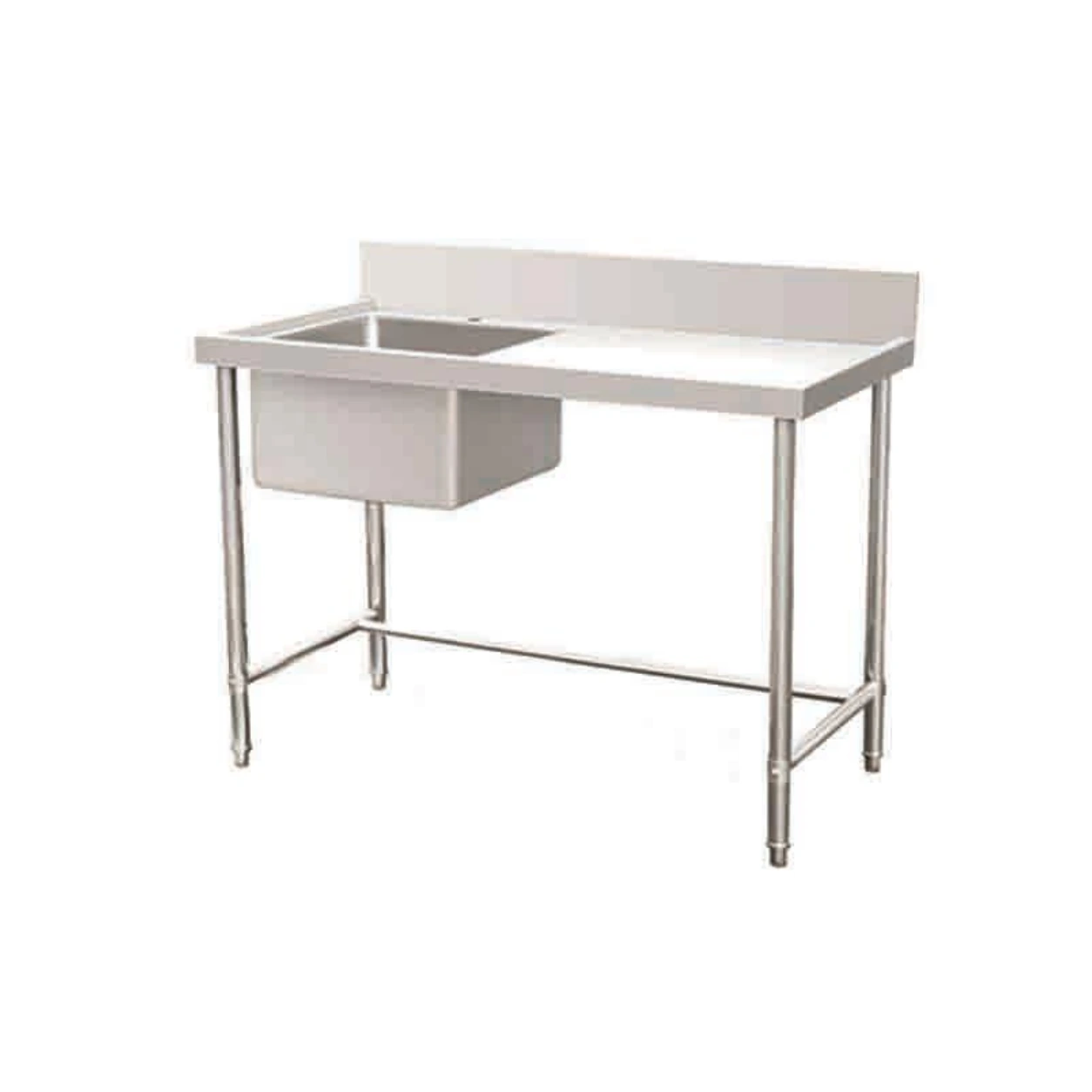
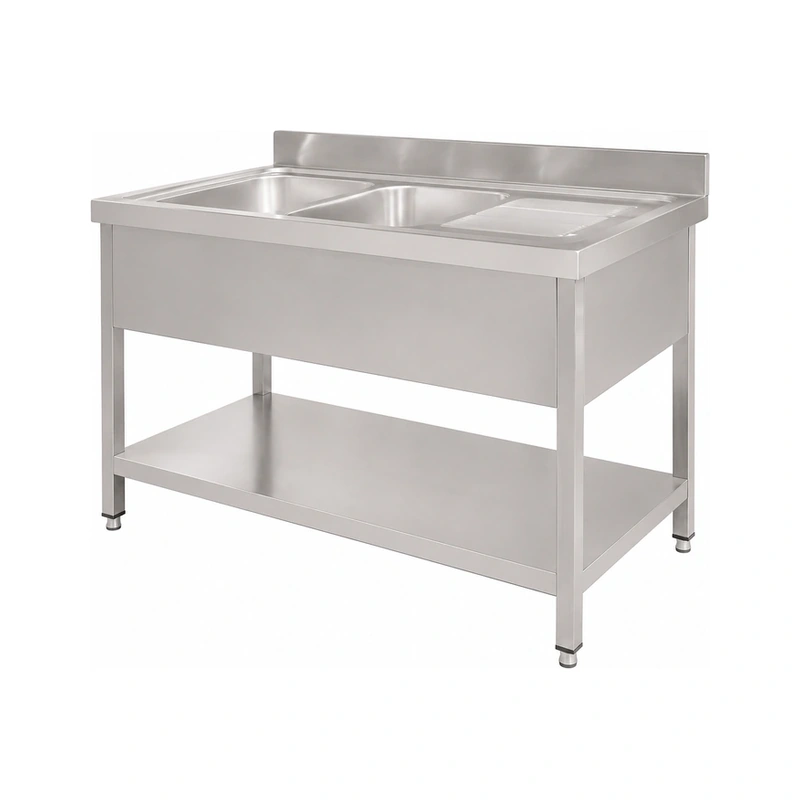
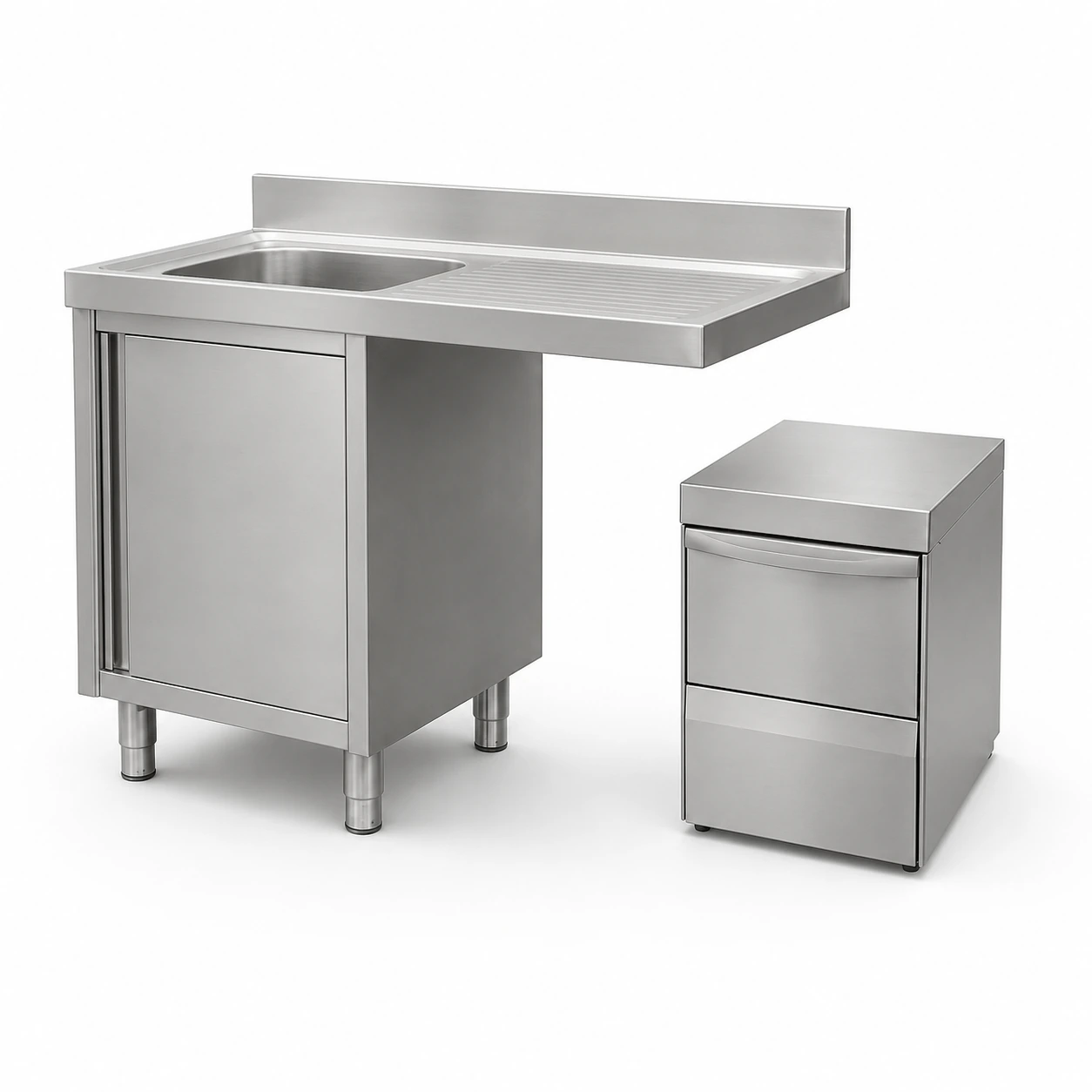
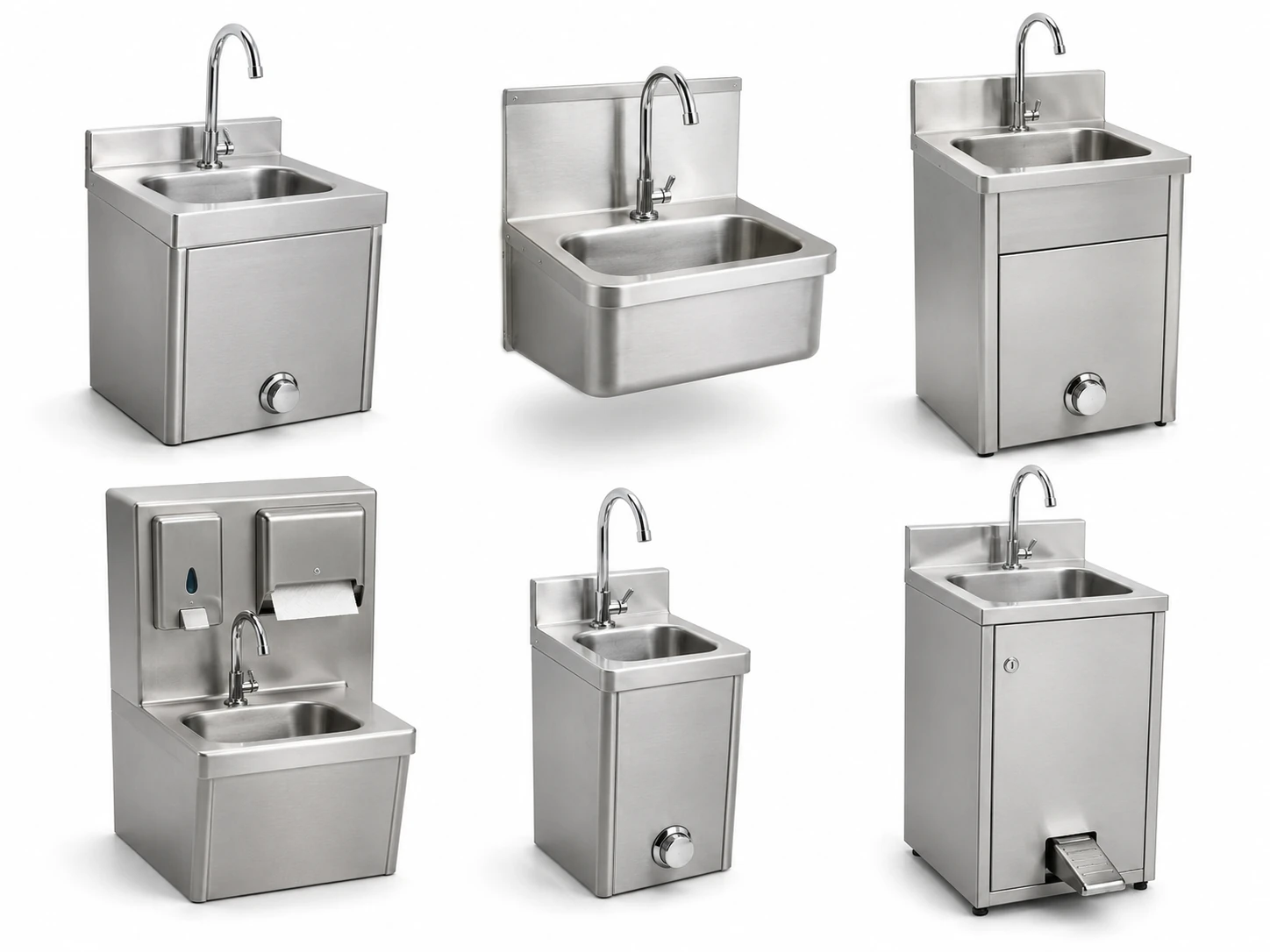
Single-bowl and double-bowl configurations remain within the same product family when the main difference is bowl quantity or overall size. Drainboard, cabinet and dishwasher-space structures require separate purchasing checks.
Match the Overall Size and Bowl Size
Commercial kitchen sink sizes should be checked at two levels: the overall frame dimension and the internal bowl dimension. A large outer size does not always mean a larger usable bowl if a drainboard or equipment space is included.
The figures shown are reference ranges from Guangjie Chinese style sink models. Final dimensions, bowl construction and backsplash height should be confirmed before production.
SUS304 vs SUS201 Kitchen Sink
Material grade should reflect water exposure, cleaning chemicals, hygiene expectations, expected service life and project budget.
SUS304 Stainless Steel
Preferred for dishwashing rooms, central kitchens, food processing preparation and projects with higher corrosion-resistance requirements.
SUS201 Stainless Steel
Can be considered for budget-sensitive projects where maintenance is controlled and aggressive cleaners or long-term moisture are avoided.
Moulded Bowl
A formed bowl can provide a smooth, consistent shape with fewer welded seams. Confirm available standard bowl sizes and drain location.
Welded Bowl
Welded construction offers more dimensional flexibility. Ask how corners, weld seams, polishing and drainage slope are finished.
Left or Right Should Follow Staff Movement
Determine the direction while standing in front of the sink. The drainboard should support the actual movement from dirty items to washing, rinsing, draining or loading into a dishwasher.
Backsplash, Undershelf, Legs and Accessories
Helps reduce water reaching the wall. Confirm height, rear clearance and whether wall-mounted faucets or pipework need space.
Provides storage for baskets, detergents and tools. Open structures also make the pipe and drain route easier to inspect.
Adjustable feet help level the sink and maintain drainage slope on uneven floors. Confirm tube structure and installation method.
Confirm faucet holes, inlet connection, waste outlet position, strainer, flexible hose and any pre-rinse spray requirement.
Confirm the Machine Before Fixing the Sink Unit
A commercial dishwasher sink unit must be designed around the actual machine rather than a generic open space. Machine dimensions and service clearances affect the sink frame and drainboard.
Guangjie catalog references include a 600 mm dishwasher void in several sink-unit configurations, but the final opening must match the confirmed dishwasher model.
Information to Prepare Before Requesting a Quote
A complete inquiry allows the supplier to confirm the correct bowl, frame, drainboard, accessories and packing structure.
Five Details That Often Cause Rework
The usable bowl, drainboard and dishwasher space must be checked separately.
Left and right should be confirmed from the operator’s front-facing position.
A shallow bowl may splash during pot washing, while an unnecessarily deep bowl can affect working posture.
Machine size, door travel, connection points and ventilation clearance must be confirmed.
Material grade, actual thickness, bowl type, frame reinforcement, weld finishing and accessories all affect value.
Commercial Kitchen Sink Buying Questions
Choose the overall size according to available space, then confirm bowl width, length and depth according to the largest items being washed.
A single bowl saves space, while a double bowl supports separate washing and rinsing or different preparation tasks.
Guangjie Chinese style model references include bowl depths of approximately 250–300 mm. The correct depth depends on pot size, splash control and staff working posture.
SUS304 is commonly recommended for wet, frequently cleaned and hygiene-sensitive areas. SUS201 may suit cost-sensitive applications when the environment and maintenance are appropriate.
Yes. Bowl quantity, size, drainboard direction, undershelf, cabinet, backsplash, faucet holes and dishwasher space can be confirmed according to the project.
Browse sink families for commercial kitchen washing and hygiene areas.
Single bowl, double bowl and drainboard configurations with reference sizes.
Compare single or double bowls, moulded or welded construction and drainage directions.
Plan the sink, drainboard and undercounter dishwasher as one working station.
Send the Kitchen Layout and Washing Requirements
As a commercial kitchen sink supplier, Guangjie can confirm bowl quantity, dimensions, material, drainboard, undershelf, dishwasher space and packing according to your project.