
Knowledge
How to Choose a Commercial Stainless Steel Work Table
This commercial stainless steel work table buying guide covers stainless steel grade, dimensions, material thickness, undershelf structure, backsplash, packing method and quotation information for restaurant, hotel, canteen and central kitchen projects.
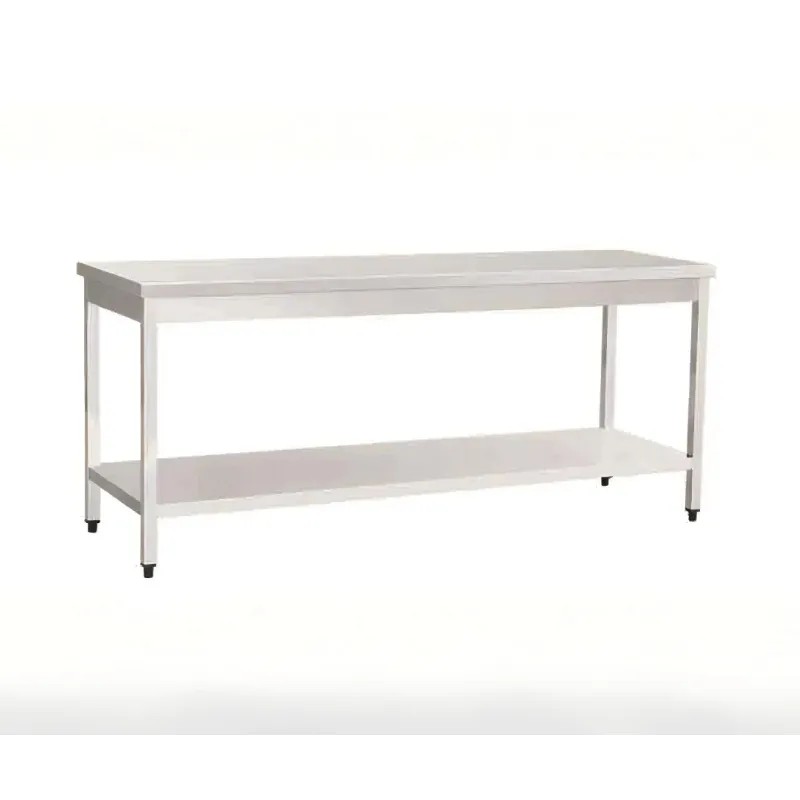
A Work Table Should Fit the Workflow Before It Fits the Catalog
The correct table is determined by what happens on the surface, what must be stored below, where the table will be installed and how the equipment will be shipped. Selecting only by overall size can lead to poor aisle clearance, difficult cleaning, insufficient storage or an unsuitable material grade.
Preparation, plating, packing, equipment support, meat cutting and wet-area work may require different surfaces and structures.
Confirm wall length, aisle width, adjacent equipment, door access and the clearance required for staff movement.
Choose material grade, thickness, undershelf, backsplash, layer quantity and fixed or detachable construction.
Send exact dimensions, material, thickness, shelf type, quantity, packing requirement and destination port.
Choose Length, Depth and Height as a System
Commercial kitchen work table sizes should be selected according to aisle width, kitchen workflow and adjacent equipment. A longer table provides more preparation area but also affects staff reach, while depth and height must suit the working task and surrounding counters.
The ranges below are practical reference values from Guangjie work-table series. Final dimensions should be confirmed against the exact model and project drawing.
SUS304 or SUS201?
When comparing SUS304 vs SUS201 for a commercial work table, consider moisture, cleaning chemicals, hygiene expectations, service life and project budget.
SUS304 Stainless Steel
Commonly selected for humid kitchens, washing areas, central kitchens and projects with higher hygiene and corrosion-resistance requirements.
SUS201 Stainless Steel
A more economical option for dry environments, light-duty applications and projects where budget is a primary consideration.
Material grade alone does not determine final durability. Surface finish, weld quality, reinforcement, cleaning method, chemical exposure and actual material thickness also affect service performance.
Select the Lower Shelf by Storage and Cleaning Needs
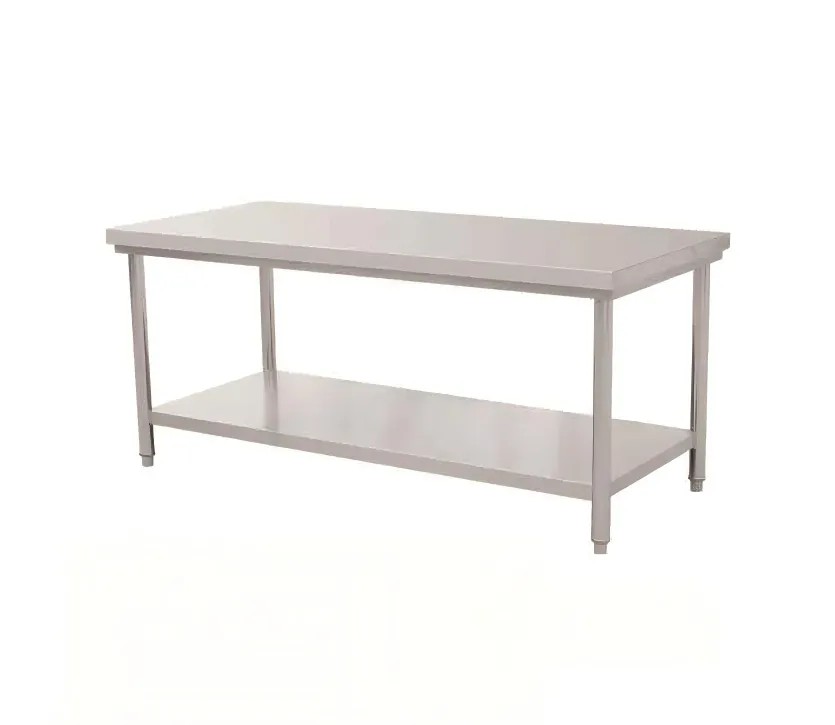
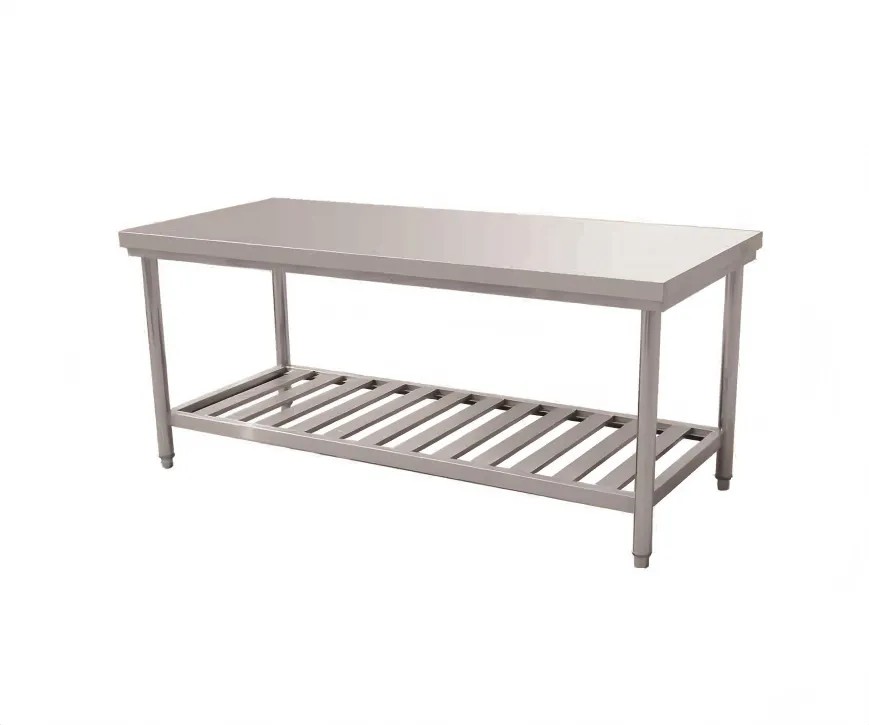
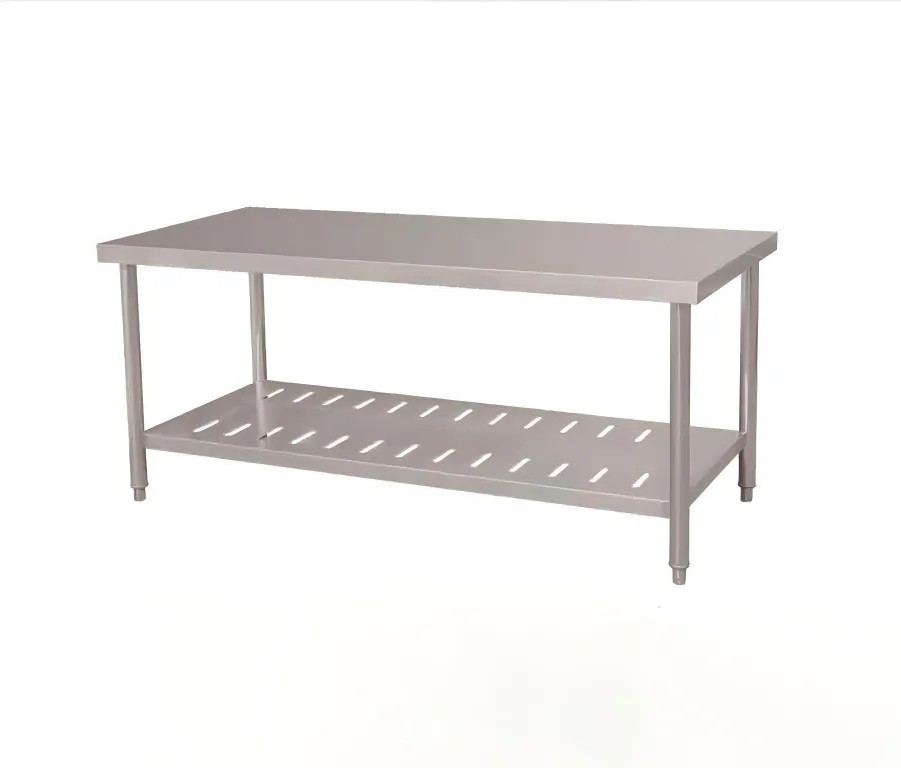
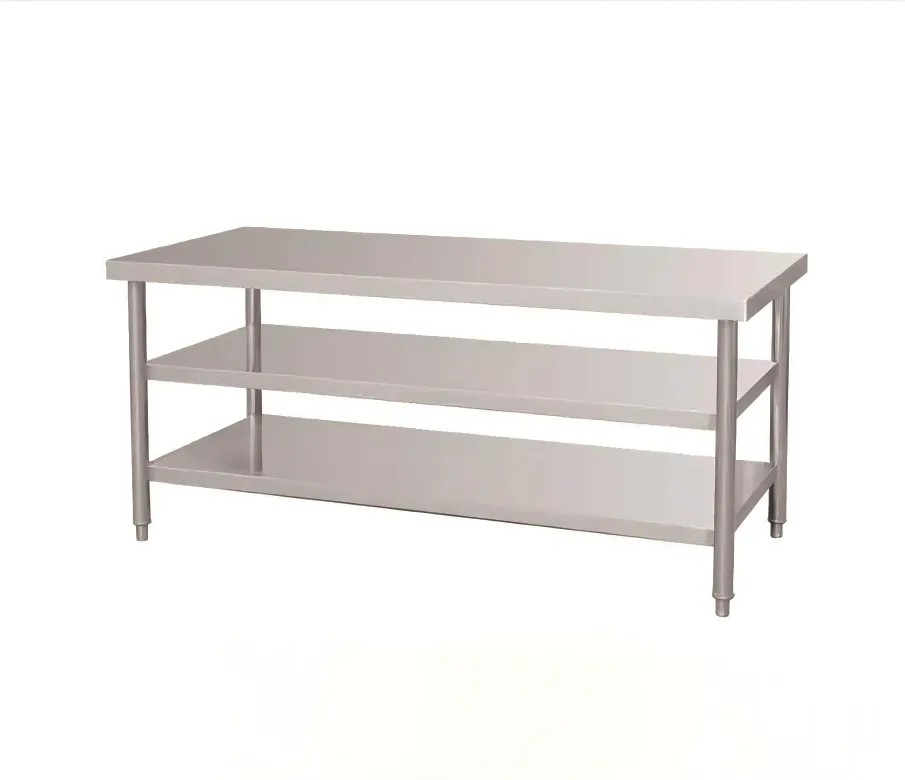
Common work table undershelf types include solid, slatted, perforated and multi-tier structures. The selected undershelf changes how the table stores equipment, drains water, circulates air and is cleaned during daily operation.
With or Without a Backsplash?
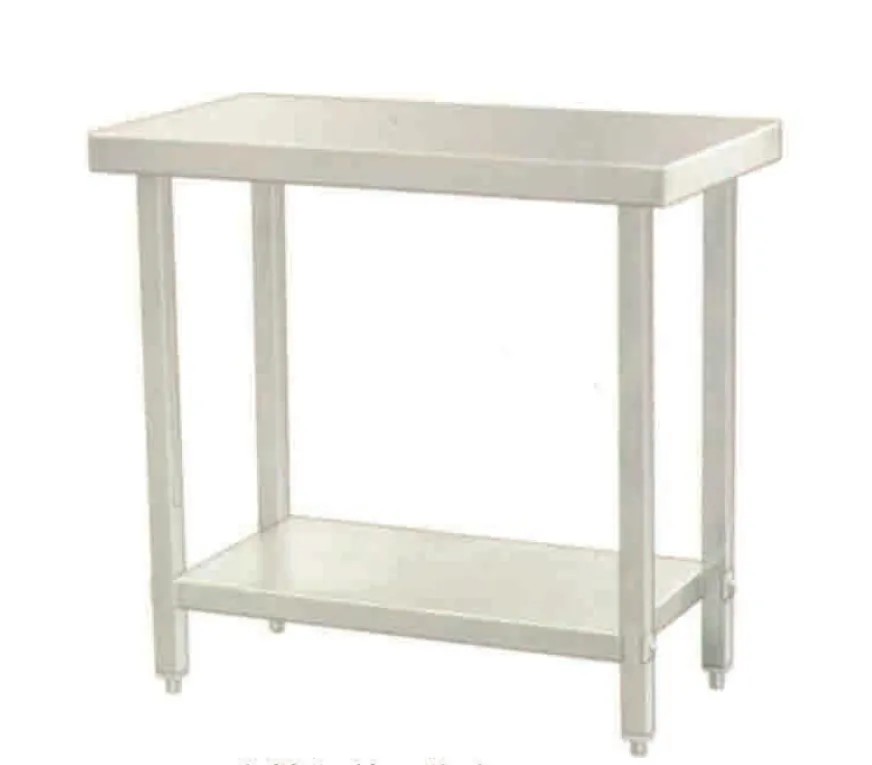
The table is installed against a wall, liquids or ingredients may reach the rear edge, or the project requires a clearer separation between the work surface and wall.
The table is used as an island, must be accessed from both sides, or needs to align with equipment that has no rear upstand.
Do Not Judge Strength by Thickness Alone
Typical Guangjie work-table options cover approximately 0.8–1.5 mm, but the correct choice also depends on top reinforcement, frame structure, table length, shelf load and the equipment placed on the surface.
Can suit lighter preparation, storage and cost-sensitive projects when the structure is properly reinforced.
A common project range for daily commercial kitchen preparation and general-purpose work-table use.
Consider for larger sizes, heavier use or projects requiring greater rigidity, subject to final structural confirmation.
Choose the Packing Structure Before the Order
Fixed Welded Structure
Provides a ready-to-use body with fewer on-site assembly steps. It may require more packing and container volume.
Knock-Down Structure
Detachable legs, frames and shelves can reduce export packing volume and improve container utilization.
Information to Send the Supplier
A complete inquiry reduces repeated confirmation and helps the supplier quote the correct structure.
Five Details That Should Be Confirmed Early
A larger table can reduce staff movement space and interfere with doors, refrigeration equipment or cleaning access.
Material cost may be lower, but the environment and cleaning method must be considered before final selection.
A shelf selected only by appearance may not suit drainage, ventilation or the items stored below.
Reinforcement, frame design, weld quality and table length also affect rigidity and service performance.
Fixed and knock-down structures affect packaging, container loading, installation and final project cost.
Commercial Stainless Steel Work Table Buying Questions
Many commercial work-table series use an overall height around 800–850 mm. The final height should match adjacent equipment and the intended working task.
A 600 mm depth suits narrower kitchen lines, while 700 mm provides more preparation and lower storage space. Some heavy-duty series also use 760 mm or 800 mm depths.
SUS304 is commonly preferred in humid, frequently washed and hygiene-sensitive areas. SUS201 can be considered for dry, cost-sensitive applications when maintenance is properly managed.
Slatted and perforated shelves allow water and debris to pass through more easily, while solid shelves provide a flatter storage surface. The surrounding cleaning method should guide the choice.
Yes. Length, depth, height, material grade, thickness, backsplash, shelf structure, layer quantity and packing method can be confirmed according to the project.
View available solid, slatted, perforated, two-tier and three-tier structures.
Compare stainless steel, wooden-top, chopping and cabinet work-table options.
Browse preparation tables, storage cabinets, drawer cabinets and related commercial kitchen equipment.
Send the Kitchen Layout and Required Configuration
As a commercial kitchen work table supplier, Guangjie can confirm material, thickness, dimensions, undershelf, backsplash and packing according to your project.