Knowledge
How to Choose Commercial Stainless Steel Kitchen Cabinets
A practical guide to choosing work table cabinets, drawer cabinets, wall-mounted cabinets, corner cabinets and food storage cabinets according to kitchen layout, storage method, material, size and hygiene requirements.
Start with the Storage Method, Not Only the Cabinet Size
Commercial kitchen cabinets are used for much more than storage. Some models also provide a preparation surface, some save floor space by mounting on the wall, and others connect work areas in corners. The first step is therefore to identify how the cabinet will be used and what must be stored inside.
Buyers should confirm whether they need open access, enclosed storage, drawers for small tools, wall-mounted storage, corner connection or a complete work table cabinet before comparing material and price.
Use → Position → Structure → Material
A cabinet becomes easier to specify when the decision is made in this order. First define what will be stored, then confirm where the cabinet will stand, how the doors or drawers should open, and finally choose the material and thickness.
Choose the Right Cabinet Type
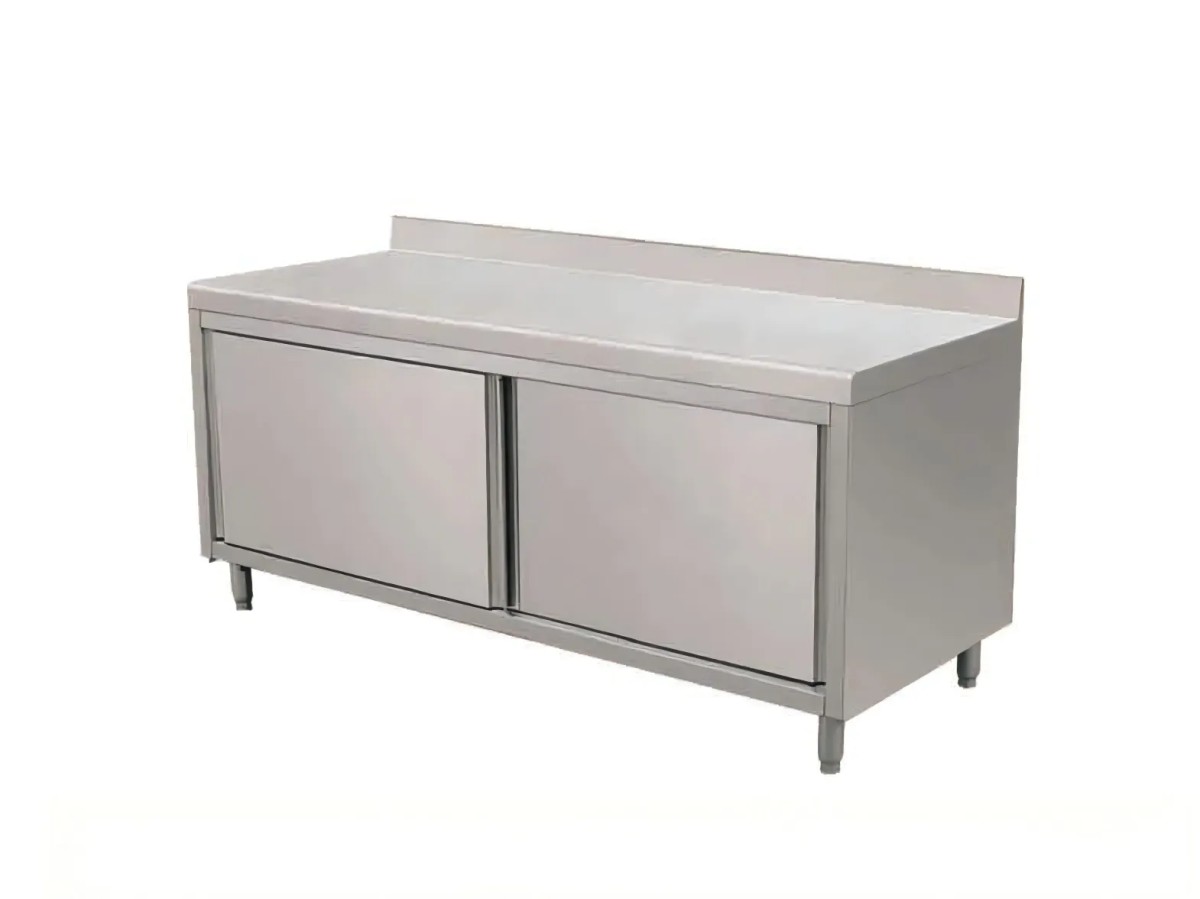
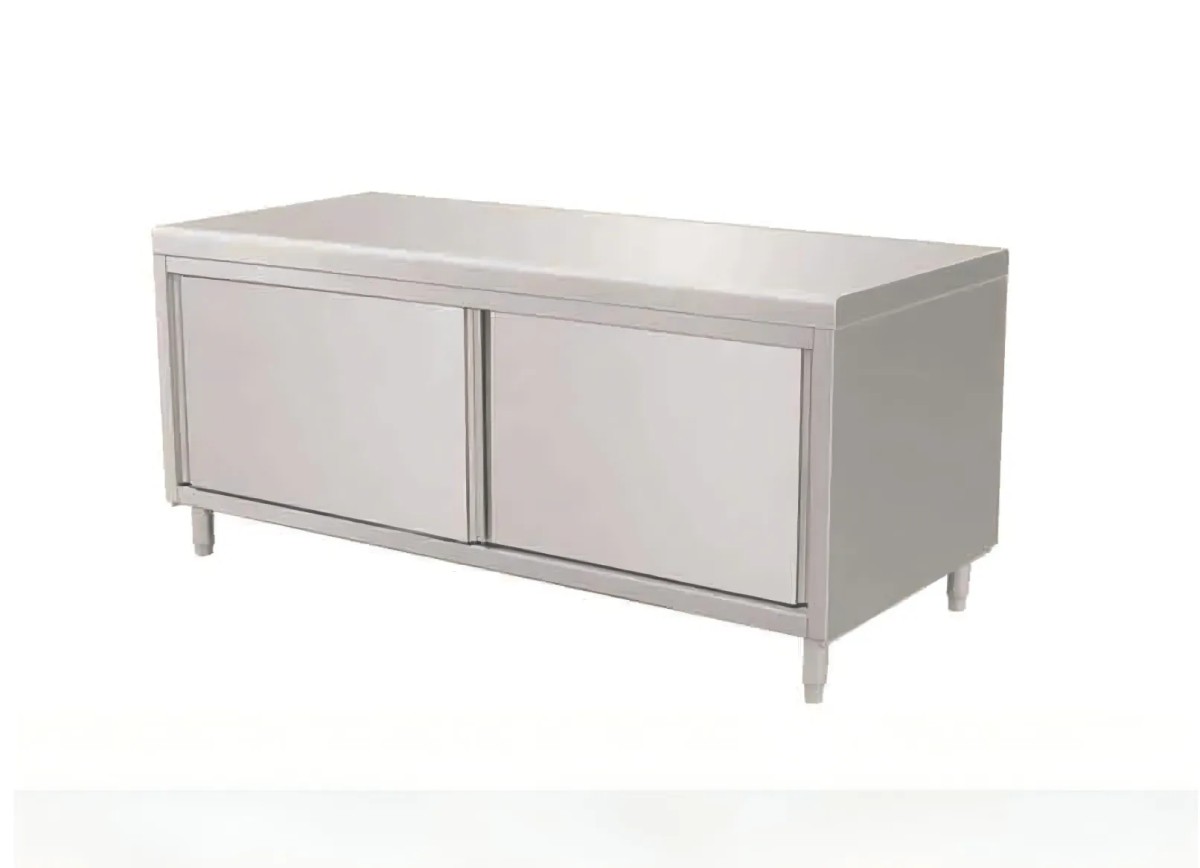
Work Table Cabinet
Combines a stainless steel worktop with enclosed lower storage. Suitable for preparation, plating and packing areas.
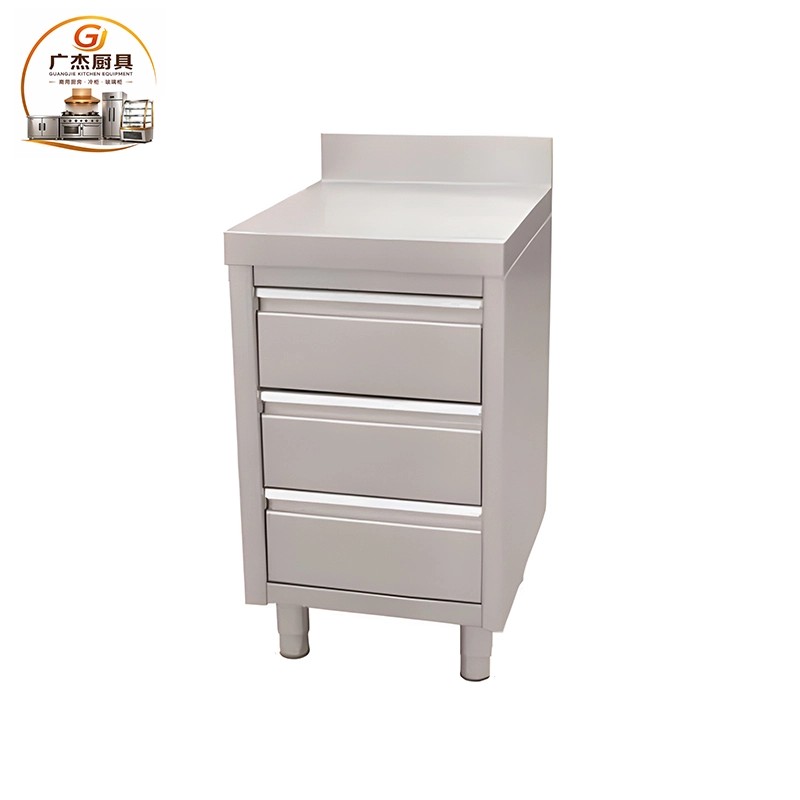
Drawer Cabinet
Separates knives, utensils, small tools and accessories into individual drawers for faster access.
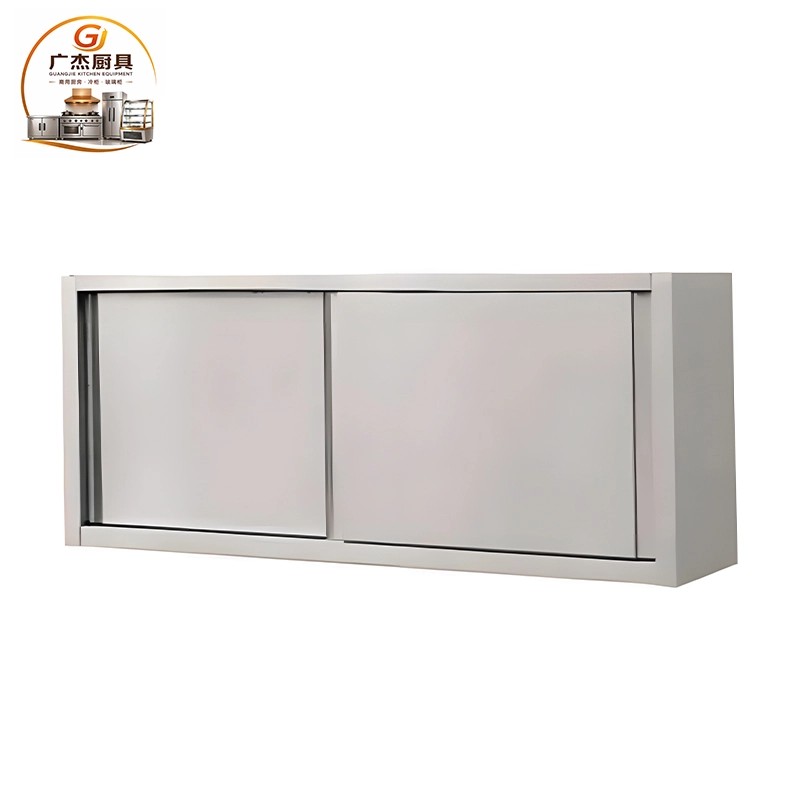
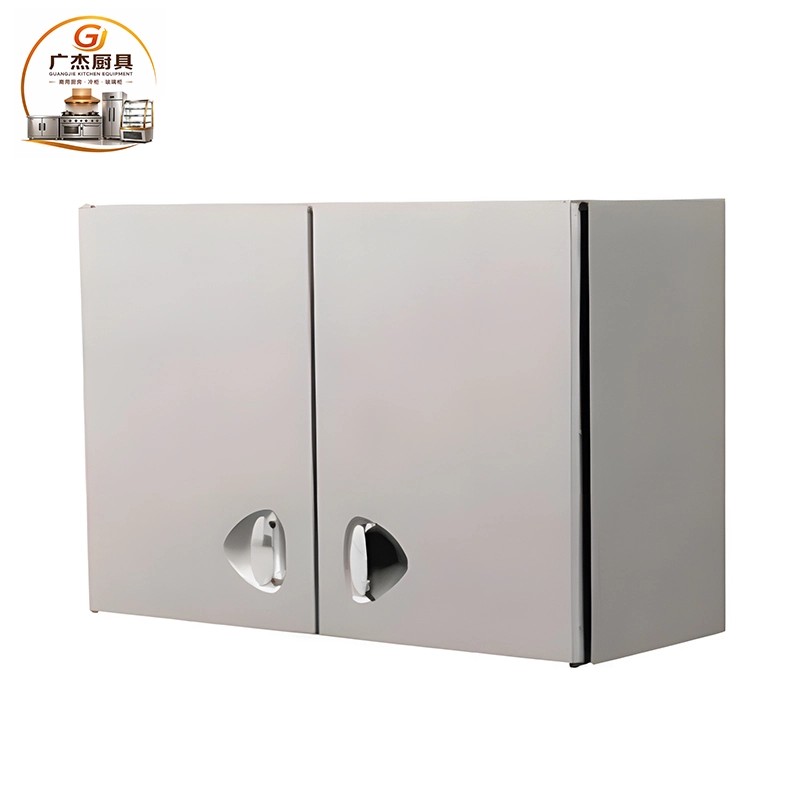
Wall-Mounted Cabinet
Uses wall space above worktops or sinks while keeping the floor area clear.
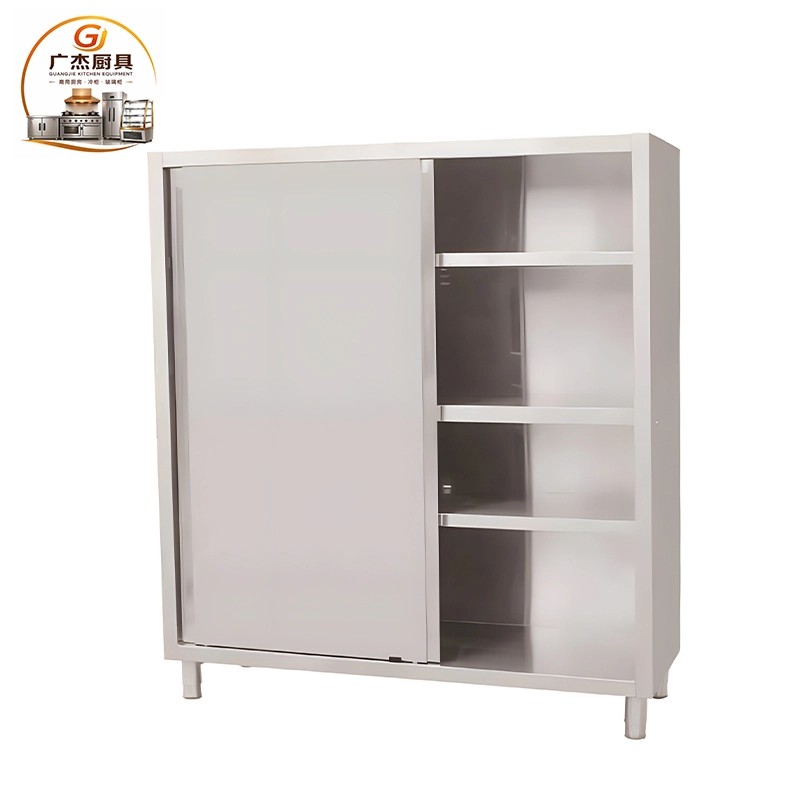
Food Storage Cabinet
Provides larger enclosed storage for dry goods, containers, trays and kitchen supplies.
Corner Cabinet
Connects two kitchen lines and uses corner space that would otherwise remain empty.
Tea Station Cabinet
Integrates storage with sink, faucet, service counter or upper storage according to project design.
Sliding Doors, Hinged Doors or Drawers?
Choose SUS304 or SUS201 According to the Environment
SUS304 is generally preferred for humid areas, frequent cleaning and higher hygiene requirements. SUS201 can be considered for drier indoor areas and projects with tighter cost control.
Material grade should be confirmed together with sheet thickness, reinforcement and intended load. A thicker sheet does not automatically guarantee better cabinet performance if the frame and internal support are not designed correctly.
Confirm Size, Internal Shelves and Splashback
Check wall edges, pipes, floor drains, adjacent appliances and aisle clearance before confirming the final dimensions.
Overall Dimensions
Confirm length, depth and height according to kitchen drawings, aisle width and adjacent equipment.
Internal Shelf
Confirm shelf quantity, position, removability and load requirement. Do not assume all shelves are adjustable.
Splashback
Choose a splashback for wall-side installation or a flat top for island and equipment-connection positions.
Load Requirement
Tell the supplier what will be stored inside and whether heavy appliances will be placed on the worktop.
Check Kitchen Aisles and Workflow
Cabinet selection should support the movement of staff, trays and ingredients. In narrow aisles, sliding doors are usually easier to operate. Frequently used tools should remain close to the preparation station, while bulk storage can be placed farther away.
Information to Send Before Requesting a Quote
Continue Comparing Cabinet and Work Table Options
Frequently Asked Questions
Which cabinet is best for a narrow kitchen aisle?
A sliding door cabinet is usually more practical because the doors do not swing into the aisle.
Should I choose SUS304 or SUS201?
Choose SUS304 for wet, humid or frequently cleaned areas. SUS201 can be used in drier indoor environments with lighter service requirements.
Can cabinet dimensions be customized?
Yes. Length, depth, height, shelf arrangement, splashback and door structure can be discussed according to the project layout.
What drawings are useful for quotation?
A kitchen layout, cabinet position, required dimensions and adjacent equipment information help the supplier confirm the most suitable structure.
Send Your Cabinet Type, Size and Kitchen Layout
Guangjie Kitchen can help confirm cabinet structure, material, dimensions, shelf arrangement and packing requirements for restaurant, hotel, canteen and central kitchen projects.