Knowledge
SUS304 vs SUS201 for Commercial Kitchen Equipment
This SUS304 vs SUS201 commercial kitchen equipment guide explains the differences in composition, corrosion resistance, cost, operating environment and purchasing verification for sinks, work tables, shelves, cabinets and refrigerated equipment.

Both Are Stainless Steel, but They Do Not Perform the Same
The difference between 304 and 201 stainless steel is mainly related to alloy composition. SUS304 normally contains more nickel, while SUS201 replaces part of the nickel with manganese and nitrogen. This helps reduce material cost but generally lowers corrosion resistance in wet, salty or chemically aggressive environments.
The values above are typical alloy ranges used for general comparison. The actual material should be confirmed by the applicable standard, mill certificate or positive material identification report.
Choose the Material According to Water, Salt and Cleaning Exposure
The same kitchen can use different stainless steel grades in different positions. A sink bowl and a dry wall shelf do not face the same corrosion risk.
Wet, Washed and Hygiene-Sensitive Areas
Dry, Indoor and Cost-Sensitive Areas
Recommended Starting Point by Equipment Type
These recommendations are starting points. Final selection should also consider local regulations, cleaning chemicals, salinity, installation position and project service expectations.
How to Confirm SUS304 or SUS201
Visual appearance alone cannot reliably identify the grade. Procurement documents and instrument testing provide more useful evidence than color or simple magnet checks.
Request the mill or supplier material certificate showing grade, heat or batch information and chemical composition.
Positive material identification can compare chromium, nickel and manganese to help distinguish 304 and 201 material.
Specify whether the top, bowl, shelf, leg, panel, frame and fasteners use the same grade or a mixed-material construction.
For project orders, request material marking, inspection photos or a pre-shipment material verification record.
Do not rely on a magnet alone. Austenitic stainless steel can become slightly magnetic after cold working, welding or forming, so magnet response is not a conclusive grade test.
Material Grade Does Not Replace Structural Design
A SUS304 product can still feel weak if it uses insufficient thickness or poor reinforcement. A well-designed SUS201 product may be structurally stable but still require a suitable dry environment.
Confirm finished sheet thickness rather than relying only on a vague “heavy-duty” description.
Long worktops, shelves and sink units may require channels, frames or braces to control deformation.
Weld continuity, polishing, corner treatment and drainage slope influence hygiene and corrosion performance.
Expected load, span, adjustable feet, wall fixing and site leveling should be included in the structural review.
Good Cleaning Practice Protects Both Grades
Stainless steel resists corrosion through a passive surface film. Chloride contamination, trapped moisture and abrasive cleaning can damage that protection.
Specify the Material Clearly Before Comparing Prices
SUS304 and SUS201 Purchasing Questions
No. SUS304 is commonly preferred in wet, frequently washed and hygiene-sensitive areas. SUS201 can be considered in dry, indoor and cost-sensitive applications when maintenance is controlled.
SUS201 is stainless steel, but it generally has lower corrosion resistance than SUS304. Moisture, salt, chlorine and poor cleaning can increase corrosion risk.
A magnet alone is not conclusive because forming and welding can make austenitic stainless steel slightly magnetic. Material certificates or PMI/XRF testing are more reliable.
Thickness affects rigidity, while grade affects corrosion resistance. The correct comparison must consider both material grade and structural design.
Yes. Some projects specify SUS304 for the worktop or sink bowl and SUS201 for legs, shelves or outer panels. Every component should be stated clearly in the quotation.
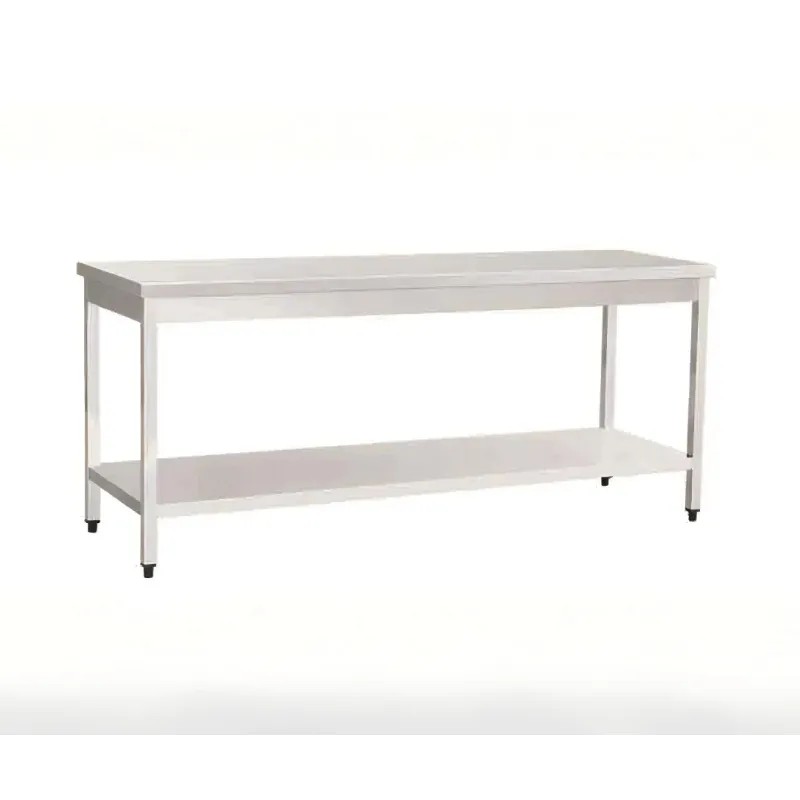
Compare material, dimensions, thickness, undershelf and packing structure.
Select bowl quantity, size, drainboard, material and dishwasher space.
View stainless steel preparation and storage equipment for commercial kitchens.
Send the Product List and Operating Environment
Guangjie can recommend SUS304, SUS201 or a component-level material combination according to water exposure, cleaning requirements, budget and project service expectations.